A second traffic stop can support a K9 search even after an earlier stop was unlawfully prolonged, the 7th Circuit ruled in United States v. Pennington. A new, independent traffic violation gave troopers lawful grounds, and the dog sniff did not extend the stop. Law enforcement officers should understand how Rodriguez, refused consent, and divided duties affect successive stops.
United States v. Pennington, No. 23-3315 (7th Cir. 2026)
Robert Pennington was stopped twice by law enforcement in approximately two hours while driving in Illinois. The first stop was unlawfully prolonged. The second stop was plainly intended to facilitate a dog sniff. Yet the 7th Circuit upheld the search and the resulting drug prosecution.
The case provides several useful lessons about successive traffic stops, refusals to consent, K9 deployments, and the rule from Rodriguez v. United States: Without independent, reasonable suspicion, a dog sniff may occur during a traffic stop, but it may not add time to the stop.
The First Stop
Pennington was stopped on Interstate 57 by Sgt. Flack of the Illinois State Police for traveling eight miles per hour over the speed limit. While checking Pennington’s documents, Sgt. Flack learned that Pennington’s license had previously been suspended, that he was possibly affiliated with a street gang, and that he had several prior drug-trafficking convictions.
After dispatch confirmed Pennington’s Kentucky license was valid, Sgt. Flack printed a warning, explained it, and returned Pennington’s documents. At that point, the traffic-related mission was complete.
But the encounter continued. After inviting Pennington to get into his police vehicle “so they did not have to shout over traffic,” Sgt. Flack told Pennington he appeared nervous and asked whether had drugs in the car. The trooper also asked if Pennington would consent to a search. Pennington refused. Sgt. Flack continued asking about drugs and whether Pennington was on parole or probation. When Pennington asked whether he could leave, Sgt. Flack did not answer. Pennington remained in the patrol vehicle for approximately three minutes after receiving his warning and documents.
The 7th Circuit had “no trouble” concluding this additional detention violated the Fourth Amendment. Sgt. Flack no longer had a traffic-related reason to hold Pennington and lacked independent reasonable suspicion of drug activity.
Returning someone’s license and issuing a warning may suggest a stop has ended, but those acts are not conclusive. The question is whether a reasonable person would feel free to terminate the encounter. While Pennington remained seated inside the patrol vehicle, he was confronted with accusations of drug possession and received no answer when he asked if he could leave. Under those circumstances, the continued questioning was not consensual.
Sgt. Flack eventually released Pennington and notified Sgt. Lillard, a canine officer positioned farther north up I-57. Sgt. Flack described Pennington’s vehicle, direction of travel, criminal history, and refusal to consent to a search. Sgt. Lillard said he would “keep an eye out for it.”
“An officer cannot deliberately slow the traffic mission, manufacture computer difficulties, unnecessarily repeat completed tasks, or transfer paperwork merely to run out the clock until a dog can be deployed.”
The Second Stop
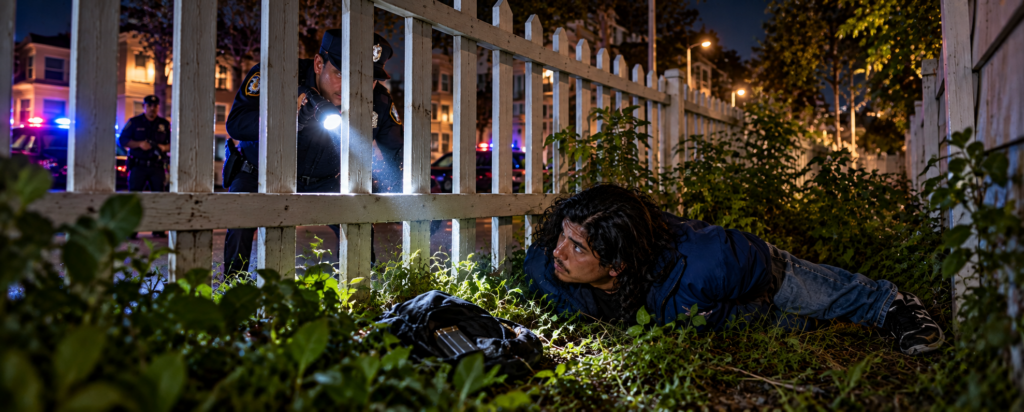
Approximately an hour later, Sgt. Lillard (also with the Illinois State Police) spotted Pennington’s vehicle and followed it. Importantly, he did not immediately initiate a traffic stop. Instead, he waited until he observed Pennington improperly pull in front of a semi-truck, giving him an independent basis for another traffic stop.
Sgt. Lillard told Pennington he would be receiving a warning for improper lane usage. While processing the warning, Sgt. Lillard experienced difficulty logging into the patrol car computer system and spent approximately four minutes speaking with the help desk. He also ran records checks and asked Pennington about his travel, criminal history, weapons, drugs, and money.
Trooper Dorsey arrived to assist. Sgt. Lillard, and Sgt. Lillard turned preparation of the warning over to Dorsey while Lillard deployed his dog. The dog was permitted to relieve itself and then made an exterior sniff of Pennington’s vehicle. Approximately 90 seconds into the sniff — and before Trooper Dorsey had completed the warning — the dog alerted. A search of the vehicle uncovered crack cocaine.
An Independent Traffic Violation Broke the Chain
At trial, the prosecution did not dispute Sgt. Flack unlawfully prolonged the first stop. Pennington therefore argued that the cocaine was “fruit of the poisonous tree,” meaning evidence obtained as a result of an illegal police action, and could not be used against him. The appellate court disagreed. It applied the attenuation doctrine, which permits the admission of evidence when an intervening event has sufficiently separated the discovery of the evidence from earlier unlawful police conduct.
About an hour had elapsed between the stops. More importantly, Pennington committed a new and independent traffic violation in view of a state trooper. Sgt. Lillard’s observation of that violation provided lawful grounds for the second stop and, according to the majority, severed the causal connection with the first stop. Sgt. Lillard’s subjective interest in finding drugs did not invalidate a stop objectively supported by a traffic violation.
This does not mean an officer may stop a motorist again simply because the motorist refused to consent to a search during an earlier encounter. Refusing consent is a lawful exercise of a constitutional right. Sgt. Lillard still needed an independent legal basis for another seizure. Pennington’s subsequent driving violation provided it.
A Dog Sniff Is Not Part of the Traffic Mission
The second stop presented a separate question: Did Sgt. Lillard prolong that stop to create time for the dog sniff? A dog sniff is not an ordinary part of the traffic mission. Unless officers have independent reasonable suspicion of drug activity, they may not extend a stop — even briefly — to conduct a sniff. The prosecution did not claim Sgt. Lillard possessed such reasonable suspicion, so the sniff was lawful only if it occurred while officers were still diligently handling the traffic violation.
The trial court credited testimony that preparing the written warning ordinarily required 10 to 15 minutes. It also found that Sgt. Lillard’s computer problems were genuine and did not represent deliberate stalling. Sgt. Lillard initially worked on the warning himself and then turned that task over to Trooper Dorsey while he deployed the dog. Thus, the sniff occurred concurrently with preparation of the warning and did not extend the stop.
The 7th Circuit emphasized that officers may divide responsibilities. The officer who begins preparing a citation or warning does not necessarily have to complete it. One officer may handle the traffic paperwork while another conducts a dog sniff, provided that the transfer of duties does not itself add time.
The court also rejected the district court’s alternative reference to any delay being “de minimis.” Under Rodriguez, there is no permissible two-minute, one-minute, or 30-second extension for a dog sniff. The majority upheld the stop because it found no extension at all.
A Warning About Coordination
Judge Hamilton dissented. In his view, the officers’ coordination and Sgt. Lillard’s redundant records checks unnecessarily extended the second stop by approximately 10 minutes. Sgt. Lillard already possessed much of the information obtained during the first stop, including Pennington’s registration, insurance information, and criminal history. According to the dissent, repeating those checks was unnecessary and created the time needed for the dog sniff.
The dissent accused the majority of rewarding police “gamesmanship.” Although it did not carry the day, the criticism deserves our attention. An officer cannot deliberately slow the traffic mission, manufacture computer difficulties, unnecessarily repeat completed tasks, or transfer paperwork merely to run out the clock until a dog can be deployed.
Timely legal analysis on law enforcement-related cases: SUBSCRIBE NOW!
The Takeaway
A refusal to consent to a vehicle search does not create reasonable suspicion or authorize another detention. An officer may pass legitimate observations and concerns to a canine officer, but the canine officer still needs a lawful basis for any subsequent stop.
Once the second stop begins, the usual rules apply:
- The new stop must be independently supported by a traffic violation or reasonable suspicion.
- A dog sniff may occur without separate reasonable suspicion if it does not prolong the stop.
- Unrelated questions are permissible only while they do not add time.
- Officers may divide traffic and K9 duties, but the division cannot delay completion of the traffic mission.
- Genuine computer problems may explain delay; strategic delay will not.
- There is no de minimis extension for a dog sniff.
- When the traffic mission is finished, the officer should clearly tell the driver that the stop is over and that the driver is free to leave before attempting a consensual encounter.
- Blog Articles