

Most use of force incidents prompt a departmental investigation that usually includes taking the officer’s statement of the incident. This process of collecting a use of force statement may seem straightforward, but there is much to be considered before taking the statement. A statement is intended to allow the officer to tell their story – to create a clear picture of what was important to them in that moment. Yet often, investigators ask questions that can lead to unnecessary information or even contradictions in the officer’s statement. Before sitting down with an officer, investigators must understand what information is important to obtain from the officer to advance the investigation. Following are three factors to consider.
To find the historical truth of what happened, do you even need to take a statement? Let the investigation drive this decision; don’t take a statement just to check a box. Consider what you need to further or complete the investigation. Do you have witnesses or video available? In some cases, this may be enough, as long as you are not short cutting the investigation process. The officer’s account may actually create discrepancies due to perception and memory. Will that provide clarity for the investigation?
Also consider Garrity rights, if applicable in your state. The Garrity “warning” often compels the officer to give a statement. Once given, the statement cannot be used in a criminal case. Garrity issues require you to have an idea of the direction the investigation is heading. You need to be flexible with the investigative process to fit the situation at hand.
Agencies asking this question are typically looking for a straightforward policy answer, but there is no clear-cut answer that will apply to all situations.
The issue? It’s a trade-off. The goal of taking a statement is memory reconstruction and communication. There is no doubt memory starts to fade immediately, so you might argue for taking a statement as quickly as possible. On the flipside, if the officer is emotionally charged and fatigued immediately following the incident, they may be unable to go through the effortful process of reconstructing and articulating the memory for you. In this case, allowing a sleep cycle (or several) will better serve the investigation and pursuit of the truth.
Law enforcement administrators should avoid putting a mandatory waiting period in place. Rather than trying to find a policy applicable to all situations, agencies should adopt flexible policies that can adapt to the situation and the officer’s response. There is benefit in moving the interview process closer to the event, but it’s more important to choose a time that facilitates a productive interview.
The key to the interview process is to understand an officer’s state of mind and decision-making process during the event. To do so successfully, we have to get out of our own way!
Most of us in law enforcement have an interview approach of trying to get at the facts that support probable cause, support an arrest or support us taking action in some way. On domestic violence calls or when interviewing criminal suspect, for example, we know the information we need to collect; we ask questions designed to obtain that information.
In cases of use of force, it doesn’t matter how much information you have on the case. You don’t know the officer’s state of mind and decision-making process used to get there so you must allow the officer to tell the story. There are several keys strategies that can help:
To learn two additional considerations for use of force statements, view our on-demand webinar: Officer Use of Force Statements: Considerations for Investigative Priorities.
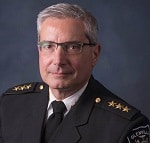 MIKE RANALLI, ESQ., is a Program Manager II for Lexipol. He retired in 2016 after 10 years as chief of the Glenville (N.Y.) Police Department. He began his career in 1984 with the Colonie (N.Y.) Police Department and held the ranks of patrol officer, sergeant, detective sergeant and lieutenant. Mike is also an attorney and is a frequent presenter on various legal issues including search and seizure, use of force, legal aspects of interrogations and confessions, wrongful convictions, and civil liability. He is a consultant and instructor on police legal issues to the New York State Division of Criminal Justice Services, and has taught officers around New York State for the last 11 years in that capacity. Mike is also a past president of the New York State Association of Chiefs of Police, a member of the IACP Professional Standards, Image & Ethics Committee, and the former Chairman of the New York State Police Law Enforcement Accreditation Council. He is a graduate of the 2009 F.B.I.-Mid-Atlantic Law Enforcement Executive Development Seminar and is a Certified Force Science Analyst.
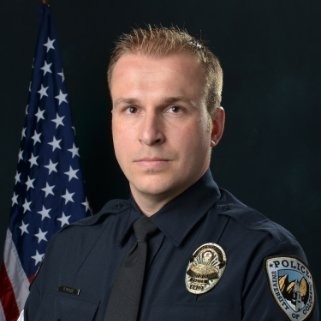 Paul Taylor is an Assistant Professor in the School of Public Affairs at the University of Colorado Denver where he studies decision making and human error in the context of use of force encounters. He is also a senior instructor and course coordinator for the Force Science Institute. Paul has over 10 years of practical law enforcement experience including time as a department training manager, patrol sergeant and use-of-force instructor. He is a Colorado POST-certified train-the-trainer and a subject matter expert on the Colorado POST Curriculum Committee. Paul has delivered law enforcement instruction for academy, field training, and advanced in-service audiences as well as graduate and undergraduate level courses in both classroom and online formats. He is actively engaged in law enforcement research and training across the United States and regularly presents at both academic and practitioner conferences.[strategem_author][vc_custom_heading text=”Officer Use of Force Statements:
Considerations to Support Investigative Priorities” font_container=”tag:h2|font_size:36.73|text_align:center|color:%23ffffff” use_theme_fonts=”yes”]