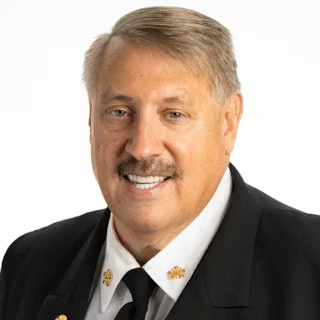
On Dec. 3, 2021, firefighters responded to a residential structure fire in Rock Falls, Illinois. Less than two hours later, Lt. Garrett Ramos died after falling through the floor into a basement that firefighters did not know existed. The tragedy ultimately led to a $31.5 million verdict against the city, the largest firefighter line-of-duty death verdict in U.S. history.
The more important takeaway for fire service leaders is what the incident revealed about operational discipline, incident command, accountability systems, and firefighter survival. Investigators, fire service experts, and testimony presented during the case identified multiple breakdowns that compounded over time, eventually creating the conditions that led to Ramos’ death.
The case serves as a stark reminder that aggressive firefighting and disciplined risk management are not opposing ideas. In fact, firefighter survival depends on both.
Timely fire service content in your inbox: SUBSCRIBE NOW!
The Fireground Problems Started Early
According to testimony and incident analysis, the first major breakdown occurred during the initial size-up and 360-degree assessment. The structure was a small 1,200-square-foot ranch-style home, but it included a basement that command failed to identify as the first one to arrive on the scene.
Experts and firefighters involved in the case noted that 50% to 75% of homes in the area had basements and that NFPA 1700 specifically emphasizes verifying basement conditions because fires above basements dramatically increase collapse risk. The issue was not simply that the basement was difficult to see from the exterior. Testimony indicated firefighters did not ask homeowners whether the structure had a basement despite the incident commander speaking with them on the initial 360-degree size up.
Structural Collapse Warnings Continued to Build
As the incident progressed, conditions deteriorated rapidly. According to the timeline presented during the case, firefighters encountered multiple warning signs of structural compromise, including a garage collapse, roof truss collapse, and eventually a visible partial floor collapse.
By the time the structure became heavily involved, all occupants had already escaped the home. Yet firefighters remained inside as conditions worsened. Testimony described firefighters cycling through multiple air bottles while portions of the structure became increasingly unstable.
The discussion surrounding the incident repeatedly returned to one key question incident commanders must constantly evaluate: Are firefighters making progress, or are they assuming increasing risk with diminishing benefit? That question becomes especially important once structural collapse indicators appear.
The Safety Officer Assignment Was Significantly Delayed
Another major operational failure involved the delayed assignment of a safety officer. NFPA 1561 states a safety officer should be assigned “as early in the incident as possible.” Yet testimony showed a dedicated safety officer was not formally assigned until after the mayday call had already occurred even though a chief officer was available and unassigned to a function.
The issue was not simply about checking a box in the incident command system. A dedicated safety officer provides a critical layer of oversight, focusing on firefighter survivability, changing conditions, and operational hazards while the incident commander manages the broader response. Without someone assigned specifically to monitor those risks, command can become overloaded with radio traffic and operational coordination.
This incident also highlights the importance of structured command operations. A fixed command position, clear communication with accountability personnel, and a broad view of changing fireground conditions help the incident commander maintain control when an incident becomes chaotic. The incident commander remained mobile, walking around the building during the entire incident. NFPA 1561 specifically states, “establish a fixed command post when appropriate.”
The Mayday Response Became a Second Failure
The most devastating breakdown occurred after Lt. Ramos transmitted multiple maydays. Video and testimony presented during the case showed there was approximately a four-minute delay between the mayday calls and the initiation of a Personnel Accountability Report, or PAR.
During that time, confusion spread across the fireground. Firefighters could be heard trying to determine who was missing while command struggled to organize accountability efforts.
According to testimony, the accountability process itself was then improperly performed. Ramos’ name was never verbally confirmed during the PAR process, yet command ultimately announced all interior firefighters were accounted for. Investigators later determined Ramos remained missing for approximately 35 minutes before crews began searching specifically for him.
For many in the fire service, this portion of the case became the clearest example of why accountability systems must be practiced repeatedly under realistic conditions. Policies alone are not enough.
Training Cannot Be Infrequent or Informal
One of the most striking details involved the department’s training frequency. Command staff reportedly acknowledged they had trained on the department’s PAR and mayday procedures only five times over roughly 20 years.
That testimony became a major focus because it demonstrated how infrequently departments sometimes train on low-frequency, high-risk events. Firefighters spend enormous amounts of time practicing hose deployment and fire attack operations. But maydays, firefighter rescue, and accountability breakdowns are often treated as occasional drills instead of core operational competencies.
Repetition matters. High-stress incidents degrade memory and decision-making, which is why emergency procedures must be practiced before they are needed. The same principle applies to fireground command, mayday response, and PAR procedures. Departments that routinely practice simulations build the muscle memory necessary to function effectively when chaos hits. Without that repetition, even experienced officers can struggle during rapidly evolving emergencies.
“The goal is not to blame. The goal is to identify preventable risks before they contribute to another tragedy.”
Firefighter Safety Is a Leadership Responsibility
The fire service has long valued aggressiveness and determination. Those qualities remain essential. But this incident reinforced that operational discipline and risk management are equally important components of professional firefighting.
For fire service leaders, several recurring themes emerge from this case:
- Policies and SOGs must remain updated and aligned with current standards.
- Departments should regularly train on maydays, PAR procedures, radio communications, and incident command operations.
- Incident commanders must continuously evaluate changing conditions and firefighter survivability.
- Fireground culture should reward disciplined decision-making, not reckless persistence.
Perhaps the most important lesson is that tragedies like this cannot simply become cautionary stories discussed briefly before the fire service moves on. Every close call and line-of-duty death contains lessons that departments must be willing to examine honestly. The goal is not to blame. The goal is to identify preventable risks before they contribute to another tragedy.
- Webinars