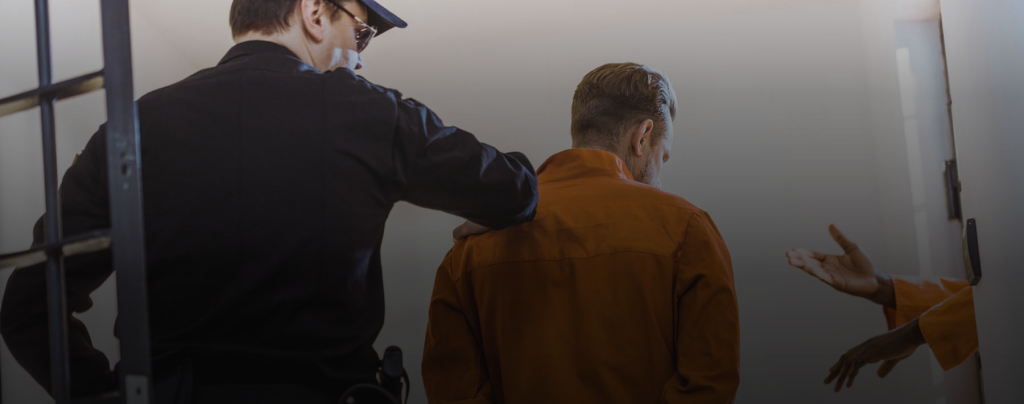
When most citizens think of the local jail, they may think of inmates housed in units or cellblocks. The facility may be old, with iron bars, or more modern, with brightly lit units and more comfortable day rooms and cells. Inmates watch television, play board games or engage in recreational activities such as basketball and volleyball. They may also participate in programs. I have toured many jails, and I always ask to see the program areas.
Just about every jail has programs. But does the public — who we serve and keep safe — understand and appreciate their value? Do staff members appreciate the important purpose served by the programs in their facilities, or do they see them as babysitting activities to keep the inmates occupied?
In my career, I am proud to say I served as programs director at the Fairfax County Adult Detention Center for the Fairfax County (Virginia) Office of the Sheriff. I was assigned to the jail programs section for eight years. Prior to that assignment, I supervised programs in the facility’s Pre-Release Center. In both areas, I worked with a great staff, as well as many caring, concerned and compassionate civilians who wanted to provide offenders with opportunities to improve themselves.
Changing Inmates’ Lives
When I taught corrections at the college level, my students often asked me whether I believed offenders in jail can change and turn their lives around. My answer always began with a definition. According to the Merriam-Webster Dictionary, “change” means to make radically different, a transformation or modification.[1]
We all make changes in our lives. We shed some weight. We study and obtain degrees. We learn new languages. We develop skills in sports through hours and hours of conditioning and practice. All these accomplishments take time, concentration, hard work and energy. Many of us are proud of our achievements and put in the effort to retain what we have learned.
In jails, officers and civilians work in an environment that is unique — regimented, controlled and secure. Many inmates realize that they have really “screwed up” and do not want to reoffend after they are released. They want to change and never return to jail, but it’s up to the jail to provide the programs they need to accomplish that goal.
The bottom line is, change takes effort, commitment and hard work. It takes obeying the rules and participating in programs that address inmates’ criminal behavior. Therefore, when they tell me that they want to change, I look to see what hard work, effort and commitment they exhibit. Talk is cheap; many inmates use the word “change” as a punchline.
Info Sheet: Inmate Manipulation in Corrections DOWNLOAD NOW!
Getting Out, “Going Straight”
I told my students and civilians in programs that if I encounter an ex-inmate who holds down a job, stays sober, cooperates with probation and parole officers, has paid off court fees and fines, has stayed out of trouble and not committed new crimes, that is the true definition of change. Believe it or not, I have encountered plenty of former inmates in the community who have made it in this way.
Corrections has several functions in our society. Courts take freedoms away, either by pre-trial detention or post-trial incarceration. We maintain custody and control of inmates. However, one of the main functions of any correctional institution is treatment and reintegration. Personal problems that cause people to commit criminal behavior can, through programs, be treated in a meaningful way.
For example, if an offender is a drug user, they may commit crimes to support their habit. A drug education program may help them become sober. An inmate with no marketable skills could possibly, while incarcerated, learn vocational or trade skills. Many inmates lack education and understand they need to have at least a GED or high school diploma to be successful on the outside. These offenders may take steps to obtain academic credentials while locked up.
The Value of Jail Programs
As a jail officer who worked in inmate housing areas, I can say that the shifts were easier when the inmates were occupied. When inmates were watching movies or sporting events, they did not generally misbehave because they knew their TV privileges could be taken away. When they went to the gym for physical recreation, I noticed they returned less boisterous because they had had a chance to let off steam.
Inmates have needs, and corrections staff should do what they can to meet them. According to Dr. Robert Johnson of American University and research from Hans Toch, inmates undergo a transactional process, adjusting to the environment of the institution.[2] This adjustment process reveals seven dimensions that express the preferences of inmates and their needs. Participation in institutional programs can support each one. They are:
- Activity: Inmates have a need to be occupied — to fill time. Physical and mental activity can be positive. Recreational programs such as basketball, volleyball and using exercise equipment can be personally fulfilling. Also, to facilitate a positive mood, many inmates engage in programs that can stimulate them intellectually.
- Privacy: Inmates want privacy, but this can be difficult to find in a correctional institution. However, privacy also means a desire for quiet, peace and being away from overstimulation. As a rule, the small groups in programs tend to be orderly and quiet.
- Safety: Inmates are concerned about their physical safety. They do not want to be assaulted or harassed or have their property damaged or stolen. Also, they would like to be in safe surroundings. When inmates are carefully screened, supervised and observed by staff, programs can promote safety. Also, I recall inmates telling me that things get tense at times in the unit, and attending programs allows them to “cool off.”
- Emotional feedback: We all desire to be loved, cared for and appreciated. Inmates are no different. Emotional feedback also means a need for intimate relationships, though various kinds of intimate relationships are discouraged in well-run facilities. However, there is also a need for staff to be empathetic to inmates’ problems. Well-trained, security-minded program personnel — including volunteers — can show concern and empathy, but must also guard against manipulation.
- Support: Inmates want tangible and reliable assistance from services, programs and staff to help them improve and advance their needs and skills. Jail programs can help in those areas.
- Structure: Facilities should be orderly, stable and keep consistent schedules. Rules should be clear-cut and enforced fairly. Inmates look forward to programs and activities, and things should run on time.
- Freedom: Yes, all inmates want freedom. However, in this context, inmates want to be autonomous to a point and be treated as adults, with minimal restrictions. They also want to govern their own conduct. In programs, they have opportunities to make decisions about their conduct and the effort they put forth.
Types of Programs
In my career, my staff and I supervised many types of programs. The most effective programs, in my view, are those in which staff members confront the inmates about the problems and behavior that got them locked up. Some criminal behavior cannot be “sugar coated.” While some inmates take advantage of available programs, using them to straighten out and eventually live a crime-free life on the outside, some will inevitably use programs as a way to game the system. Jail staff need to observe inmates carefully to determine whether they’re serious about using programs to achieve positive life goals.
Here are the major types of programs I’ve seen successfully integrated into jails:
Substance abuse: Programs such as Alcoholics Anonymous (AA) and Narcotics Anonymous (NA) are effective. Both are self-help programs and can work well in treatment plans combining them with substance abuse education programs. Both AA and NA meetings are led by recovering substance abusers, and the leaders I knew and respected told me they could see through inmates’ denial of the problem and their “BS.”
Education: In my career, I met many inmates who had difficulty reading and writing. The pull of criminal behavior is strong; many chose to skip school, hang out with fellow offenders, and put a low priority on getting an education. When they come to jail, they often wake up, realizing that to get anywhere in life without at least a GED or high school diploma. Educational programs can also include language skills programs for inmates who do not speak, read or write English. One of the best programs that was under my supervision was ESL (English as a second language). There are many qualified teachers working in local schools, colleges and universities who can be recruited to come into jail and teach. Some of our instructors had experience in government, having worked overseas. Also, some retired citizens helped with tutoring. In addition, inmates can use technology assets (including carefully monitored computers and tablets) to do classwork for programs. This can help prepare them for the outside world.
Vocational skills: Having job skills is a must to succeed on the outside. Vocational programs can help inmates develop the skills they need to help them reintegrate with the community upon being released. Jails are secure facilities, and the implementation of vocational programs depends on staffing, funding and good security procedures. An example of successful vocational programs in practice can be found at the San Diego, California, Sheriff’s Office. Courses of study offered to inmates there include baking, culinary arts, bicycle shop, commercial laundry, industrial sewing, healthcare service assistant training, construction trades and community-involved vocational incarcerated crew services.[3]
Addressing criminal behavior: If offenders want to stay out of jail, they must address, in clear terms, the behavior that led to their arrest. Part of the typical offender’s lifestyle is to blame others. Committing crime is a matter of choice, and the pull of the street is strong. To counter this, they must resolve what is wrong with their lives. Often, it takes many arrests and incarcerations for this need to take root. (Unfortunately, some never “get it.”) There are many successful jail programs designed to help inmates deal with criminal behavior. One example is Opportunities, Alternatives & Resources, a non-profit organization in Northern Virginia. This agency helps offenders and families with pre- and post-release services, programs that address domestic violence, and alternative sentencing options for nonviolent misdemeanor offenders.[4]
Life skills: Many offenders do not know how to manage money — including managing a checking account, saving money, paying bills, and so on. Many inmates know nothing about raising children, caring for a family, or pre- and postnatal care. Luckily, these skills can be acquired as adults through jail programs. Life skills also include reconnecting with family members and contributing positively to one’s family. Inmates know that life is passing them by and should be encouraged to participate in properly supervised programs involving family members.
Mental health: Many offenders have wide-ranging mental health issues. Ask any jail officer — they will tell you the local jail is the largest mental hospital in the community. These are difficult offenders, as their behavior may be unpredictable, and many need treatment and medications. A mental health section, sometimes called a forensics unit, can house newly admitted inmates who exhibit behavioral problems, are observed by officers acting irrationally, and/or are suspected of having mental health issues upon arrest. Jail classification and medical staff are key resources for these programs. Offenders are interviewed by classification officers and provide information about their mental histories. Jail medical officers generally have some mental health training and may suspect mental issues when examining inmates. In some jails, mentally ill inmates may be placed in a unit with close proximity to the mental health staff and correctional officers. Since 1999, the Harris County (Texas) Sheriff’s Office has operated its Mental Health Diversion Center.[5] In this program, staff members take steps to divert offenders with serious mental illnesses, substance abuse problems, developmental disabilities and neurocognitive disorders away from incarceration and into treatment. Jail personnel work with the courts and the district attorney’s office to provide information about an offenders’ mental health status to help decide on criminal charges or treatment.
Religion and spirituality: Inmates have a right to practice their religious beliefs, within security parameters. Many obtain solace and a positive outlook through religious involvement. Chaplains should have a working knowledge of all religions. Some facilities provide clergy from local churches who come into the jail to minster to inmates. Also, there are agencies such as the Good News Jail and Prison Ministry, now called Good News Global, that provide jail chaplains and other jail ministries.[6] Programs include Bible education, religious services, correspondence programs and preparation for reentry. Chaplains can also provide programs for inmates who follow the precepts of Islam, Judaism and Roman Catholicism.
Note that Lexipol policy subscribers can find an entire chapter in the Lexipol corrections policy manual about inmate programs. You’ll see all of the above covered, plus commissary and library services, inmate accounts, inmate mail and visitation, and work release programs.
The most effective programs, in my view, are those in which staff members confront the inmates about the problems and behavior that got them locked up.
Tips for Operating Jail Programs
As a former jail programs director, I would like to offer some commonsense advice about jail programs.
1. Programs should have a purpose.
Jail staff should always make it a priority to focus inmates on preparing for release, not committing new crimes, getting educated, staying sober and learning new vocational and life skills. These types of programs can have a positive impact on inmates, especially those who want to stay out of jail in the future. While attending programs gives inmates a break from the tedium, tension and routine of the unit, programs should not evolve into a “social hour.”
2. Civilians are at risk of manipulation.
While most civilians who staff jail programs are inside due to memorandums of agreement (MOAs) with outside agencies, many volunteers assist programs. All must understand the jail environment. Their “students” are pretrial detainees or convicted criminals, all in trouble with the law. Ministering to and tutoring inmates inside a jail is different from volunteering at a local church, library, or school. Civilians will be flirted with, “buttered up,” and fed sad stories of how bad jail is. In these situations, the inmates’ goal is manipulation — convincing civilians to engage in sex, help them escape, bring contraband in, carry messages to and from the street, and testify in court about the inmates’ effort in jail programs.
One inmate asked me to “fast track” him into a jail drug program because he had a court hearing coming up and wanted to show the judge that he was serious about getting clean. I denied his request, telling him he should have been making an effort long before this. Inmates who really want to change will not rely on last-minute efforts like this. I have heard volunteers say that inmates are not that bad. “Unless you are psychic,” I told them, “you do not know which inmates want to be rehabilitated and which are out to con you.”
Civilians must never, NEVER give their personal information or perform favors for inmates. One of the best AA volunteers I worked with began each session with: “I know the rules; you know the rules. Please do not ask me to break them.”
3. Officers and civilians need to communicate.
It’s important to establish and maintain good relationships between civilians and officers. Civilians in jail programs can serve as extra eyes and ears for the professional staff. They should feel comfortable interacting and talking with sworn officers and vice versa, relying on mutual respect.
Many inmates are more comfortable talking with civilians rather than uniformed staff. They may talk about thoughts of suicide, trouble in the unit, being assaulted, tensions and so on. In my career, two volunteers once informed me that two inmates in their respective programs were apparently depressed and had mental issues. Fortunately, the forensics unit acted on the information before more serious problems occurred.
If supervisors learn of incidents where civilians are being disrespected and ridiculed, they must take appropriate action. Officers who see civilians making mistakes or crossing professional boundaries should inform their supervisors and the jail program staff for corrective action.
4. Civilians need training.
Civilians, including volunteers and those functioning under MOAs, must undergo mandatory training, not just a brief orientation. Every corrections facility should have clear policies on the extent these helpful people should undergo. Training should include, but not be limited to, these topics:[7]
- Basics of the jail: what it is, and what its purpose is.
- Duties of sworn staff: post duties, classification.
- In-depth tour of the facility.
- Basic security and safety policies, including emergency procedures and contraband.
- Interpersonal communications with sworn staff.
- Inmate manipulation, including boundaries.
- Inmate culture, language and lifestyle.
- Rules for civilians, reasons for rescinding entry privileges, including statutory violations.
5. Programs are valuable.
Jail programs provide hope for inmates who want to get out and stay out. Corrections leaders must make this clear to the line staff. Not all line officers will agree — they may have seen the negative side of inmates, may have been lied to, disrespected and conned. However, it is every facility leader’s responsibility to help them understand that not all inmates use programs in a negative way. Many want to do the right thing — doing their time, getting out and staying out.
And remember: One of the functions of corrections is rehabilitation. In this regard, programs can be extremely helpful. Regardless of how it sometimes feels, many inmates can and do change.
References and Resources
- Merriam-Webster Dictionary, Accessed 5/13/2024 at https://www.merriam-webster.com/dictionary/change
- Johnson R. Hard Time: Understanding and Reforming the Prison, Third Edition. Belmont CA: Wadsworth/Thomson Learning, 2002.
- San Diego County, CA, Sheriff’s Department. Accessed 5/13/2024 at https://www.sdsheriff.gov/bureaus/detention-services-bureau/reentry-services
- Opportunities, Alternatives & Resources. Fairfax, Loudoun, and Prince William Counties, Virginia. Accessed 5/13/2024 at https://oarnova.org/
- Harris County, TX, Sheriff’s Office Mental Health Diversion Center. Accessed 5/13/2024 at https://hcsopolicy.com/policy/513-mental-health-diversion-center/
- Good News Global. Accessed 5/13/2024 at https://gnglobal.org/
- Cornelius G. The Forgotten Staff: Training Civilians and Volunteers in Corrections. Lexipol, May 14, 2021. Accessed 5/13/2024 at https://www.lexipol.com/resources/blog/the-forgotten-staff-training-civilians-and-volunteers-in-corrections/