An unarmed suspect can still pose an imminent threat of death or serious bodily injury, and the Fourth Amendment does not require officers to wait until they are seriously hurt before using deadly force. In Callaway v. Adcock, the 11th Circuit upheld a deputy’s shooting of an unarmed, violent man. The ruling shows law enforcement officers and agencies how courts weigh capability, demonstrated violence, and split-second decisions.
Callaway v. Adcock, 2026 WL 2833429 (11th Cir. 2026)
Channing Spivey was 33 when doctors diagnosed him with an aggressive form of brain cancer. After undergoing surgery, chemotherapy, and radiation, he quit his treatments and stopped taking his medications, including a mood stabilizer. On May 27, 2020, after Spivey threatened to smash a TV and punched a hole in the ceiling, his brother’s girlfriend, Zana Bloodsworth, called 911 for an ambulance.
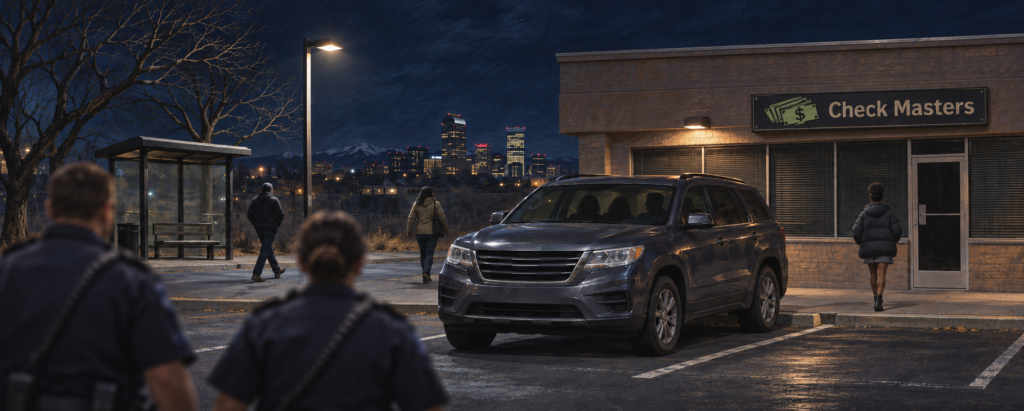
Arriving alongside EMS was Crenshaw County Deputy Brent Penny. Spivey immediately shattered the rear window of Deputy Penny’s SUV with his bare hands. He then leapt onto the hood of the ambulance and smashed the windshield with his fists, sending glass into the driver’s eyes. A TASER deployment put Spivey down for only seconds. He pulled out the prongs, got up, and kept coming.
Deputy Penny drew his pistol and retreated roughly 100 yards, ending up in the driveway of a neighbor, off-duty Deputy Mason Adcock. As Deputy Adcock had already heard screaming and the sound of breaking glass, he had armed himself with a handgun.
Going outside, Deputy Adcock encountered a large man, covered in blood, pursuing another deputy who appeared terrified. Adcock ordered Spivey to the ground at least seven times and warned he would shoot. In response, Spivey struck him in the head with sufficient force to buckle his knees and nearly render him unconscious. Deputy Adcock managed to push Spivey back about six feet, but Spivey started toward him again. With his family and Bloodsworth sheltering nearby, Adcock shot Spivey, who died at the scene.
“The Fourth Amendment does not require an officer to lose a fight, suffer serious injury, or surrender control of a firearm before using deadly force to stop an assault that reasonably presents an imminent threat of death or serious bodily injury.”
Spivey’s estate sued, arguing the use of deadly force was unreasonable because Spivey did not possess a weapon. The 11th Circuit disagreed.
The court explained that the constitutional justification for deadly force does not depend on whether a person possesses a firearm, knife, or other conventional weapon. The question is whether a reasonable officer, considering the totality of the circumstances, would perceive an imminent threat of death or serious bodily injury. Spivey had already demonstrated extraordinary violence, ignored repeated commands, resisted efforts to control him, and continued his assault despite a TASER deployment. Deputy Adcock had personally experienced Spivey’s ability to inflict serious injury. The court also acknowledged the danger that an officer who is incapacitated during a violent struggle may lose control of his firearm.
The court rejected the suggestion that Deputy Adcock was required to continue fighting until he suffered serious injury or became incapacitated. Officers are permitted to act to prevent serious harm; they are not required to wait until the threatened injury actually occurs. Nor does the Fourth Amendment demand that an officer correctly predict every aspect of an unfolding confrontation. The question is whether the officer’s perception of the threat and response to it were objectively reasonable under the circumstances.
The court also considered Spivey’s medical condition. Though his behavior was undoubtedly influenced by a serious illness, and his death was tragic, he had also made the choice to stop his own medication. Regardless, the Fourth Amendment does not require an officer confronting an immediate threat of serious injury to disregard that threat because the person’s conduct may be attributable to mental illness.
Timely legal analysis on law enforcement-related cases: SUBSCRIBE NOW!
Callaway reinforces several important principles.
- An unarmed person may nevertheless possess the capability to kill or seriously injure an officer.
- The threat assessment must consider the person’s physical capabilities, demonstrated violence, proximity, opportunity to continue the assault, and the possibility that an officer may be incapacitated or lose control of a weapon.
- The absence of a conventional weapon is relevant, but it does not resolve the question of whether deadly force is reasonable.
- The Fourth Amendment does not require an officer to lose a fight, suffer serious injury, or surrender control of a firearm before using deadly force to stop an assault that reasonably presents an imminent threat of death or serious bodily injury.
Just as importantly, an officer’s decision must be evaluated from the perspective of a reasonable officer at the scene, often required to make a split-second decision during a tense, uncertain, and rapidly evolving confrontation. Courts have the responsibility to avoid the temptation to second-guess those decisions with the benefit of hindsight, particularly when the officer has already experienced the assailant’s capacity for violence.
- Blog Articles