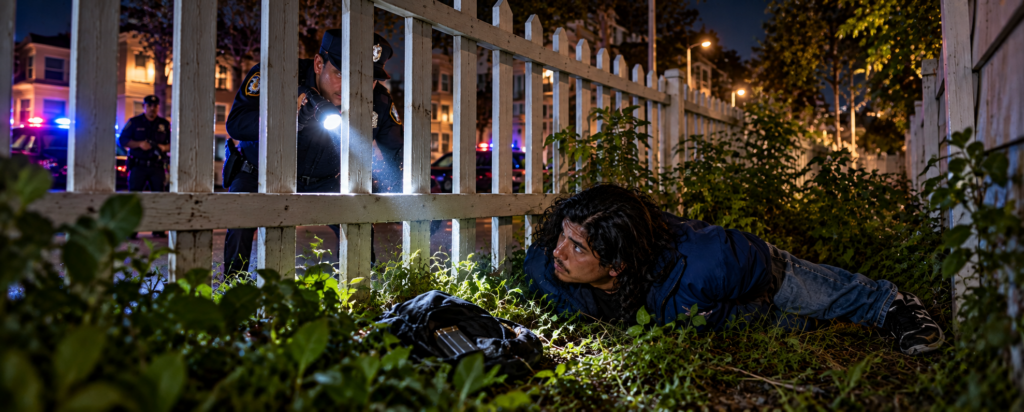
Welfare checks can justify warrantless entry under the emergency aid exception when officers have specific, objective facts showing someone inside may need immediate help. In Crosby v. Colleton County Sheriff’s Office, the 4th Circuit upheld a deputy’s entry into a potentially suicidal man’s home and the officer’s later use of deadly force when the man retrieved and raised a firearm. The case shows how Fourth Amendment analysis must evolve as an encounter changes.
Crosby v. Colleton County Sheriff’s Office, 2026 WL 2206728 (4th Cir. 2026).
A welfare check presents police officers with an uncomfortable problem. They are often called because someone may be in danger, but the person they are trying to help may want nothing to do with them. In Crosby v. Colleton County Sheriff’s Office, the court considered how far an officer could go to check on a potentially suicidal person and what happened when that encounter suddenly became an armed confrontation.
Donna Crosby called 911 and asked deputies to check on her husband, Jerry Crosby. His wife reported that Crosby had threatened earlier that evening to harm himself. He had made similar statements in the past and had not “been himself lately.”
Deputy Jacob Scott of the Colleton County (South Carolina) Sheriff’s Office responded to Crosby’s isolated riverfront home. Crosby’s truck was parked outside, but no one answered repeated knocks on the door. Deputy Scott walked around the house, looked through windows and screened porches, called out, and continued trying to make contact. A dog barked inside, but Crosby did not respond.
About 10 minutes after arriving, Deputy Scott opened an unlocked door, announced “Sheriff’s Office,” looked inside with his flashlight, and closed the door when he saw no one. He continued checking other doors and windows. Deputy Scott eventually entered a screened porch, where he found a cellphone on the floor. Nearby he saw an open notebook and a pill bottle. Believing the notebook contained a suicide note, Deputy Scott radioed that discovery.
The circumstances had changed considerably from an unanswered request for a welfare check. Deputy Scott knew Crosby had recently threatened self-harm. Crosby’s vehicle was present. He had not responded despite repeated attempts to contact him. Deputy Scott had also found medication and what appeared to be a suicide note.
At this point, another deputy had arrived. “I think he’s upstairs in the bedroom,” Deputy Scott told her. “I can see something in the bedroom, but I gotta do something with this dog.”
Deputy Scott entered the house through an open door. As he moved through the residence, he repeatedly announced, “Sheriff’s Office!” In a hallway, he found a live round of ammunition on the floor. Crosby finally answered from a bedroom, “What can I do for you?” Deputy Scott asked Crosby where he was and whether he was okay. Crosby said he was fine and repeatedly ordered Deputy Scott to leave his home.
Deputy Scott explained that someone had called about Crosby and he needed to make sure Crosby was safe. Moving to the bedroom doorway, he shone his flashlight inside and found Crosby lying in bed beneath a sheet. Crosby’s speech was slurred and his face appeared red. When Deputy Scott asked whether Crosby had taken pills, Crosby did not directly answer the question.
Deputy Scott continued trying to talk with him. Crosby then got out of bed and walked toward Deputy Scott, again telling him to leave. Deputy Scott backed into the hallway. Crosby reached into a closet near the bedroom door and retrieved a rifle. Deputy Scott immediately began shouting at Crosby to stop. Deputy Scott raised his own gun and continued backing down the hallway. Crosby picked up the rifle with both hands and began raising it while advancing toward Deputy Scott.
Deputy Scott fired four rounds. Crosby dropped the rifle and collapsed onto the bed. He later died from his wounds.
“The emergency aid exception depends on the circumstances reasonably known to the officer at the time.”
Crosby’s estate sued Deputy Scott, the Sheriff, and the Sheriff’s Office, alleging an unlawful entry, excessive force, and failure to train. The trial court granted summary judgment to the defendants, and the appellate court affirmed.
The court first addressed Deputy Scott’s entry into Crosby’s home. The Fourth Amendment ordinarily requires a warrant before officers enter a residence, but the emergency aid exception permits warrantless entry when officers have an objectively reasonable basis to believe someone inside needs immediate assistance. The court concluded Deputy Scott had such a basis.
This was not a case in which deputies entered a home merely because someone failed to answer the door during a welfare check. Deputy Scott knew Crosby had threatened to harm himself only hours earlier. Crosby’s truck was outside, suggesting he was home. Repeated efforts to contact him had failed. Deputy Scott then found an apparent suicide note and a pill bottle. Taken together, those circumstances provided an objectively reasonable basis to believe Crosby might be inside and in need of immediate assistance.
The court next considered Deputy Scott’s use of deadly force. That question was considerably more straightforward. Deadly force is justified when an officer has probable cause to believe a person presents an imminent threat of death or serious bodily injury. Crosby retrieved a rifle while speaking with Deputy Scott, ignored Deputy Scott’s repeated commands to stop, advanced toward him, and began raising the rifle with both hands.
Deputy Scott was not required to wait for Crosby to point the rifle directly at him before responding. Courts do not require officers confronting an imminent deadly threat to surrender the reactionary advantage by waiting until a weapon is fully aimed or a shot has been fired. The question is whether the person’s actions, viewed from the perspective of a reasonable officer at the scene, demonstrate an imminent threat.
The plaintiff also argued Deputy Scott should simply have left after Crosby said he was fine and ordered him out of the house. The court rejected that argument as well. By that point, Deputy Scott knew Crosby had threatened self-harm, had found an apparent suicide note and medication, had discovered live ammunition in the hallway, and had observed Crosby with slurred speech and a red face. Crosby also did not directly answer when asked whether he had taken pills.
Under those circumstances, Deputy Scott was not required to accept Crosby’s statement that he was “fine” and immediately abandon the welfare check. In fact, the court concluded it was reasonable for Deputy Scott to continue speaking with Crosby long enough to obtain firmer assurance that Crosby was not in immediate danger.
Timely legal analysis on law enforcement-related cases: SUBSCRIBE NOW!
There are two useful lessons in Crosby. First, a welfare check does not give officers unlimited authority to enter a home. The emergency aid exception depends on the circumstances reasonably known to the officer at the time. Here, the reported suicide threat, Crosby’s unexplained failure to respond, his vehicle outside, the apparent suicide note, and the pill bottle progressively strengthened the justification for entry.
Second, the reason an officer enters a home does not control the force analysis once circumstances change. Deputy Scott entered Crosby’s home to protect him, not to arrest him. But the encounter changed dramatically when Crosby retrieved a rifle and advanced while raising it. At that point, Deputy Scott was no longer simply conducting a welfare check. He was confronting an imminent deadly threat.
Officers responding to people in crisis frequently move between those roles in seconds. An encounter may begin with concern for a person’s safety and suddenly require an officer to protect themselves. The Fourth Amendment analysis must follow the facts as they change.
- Blog Articles