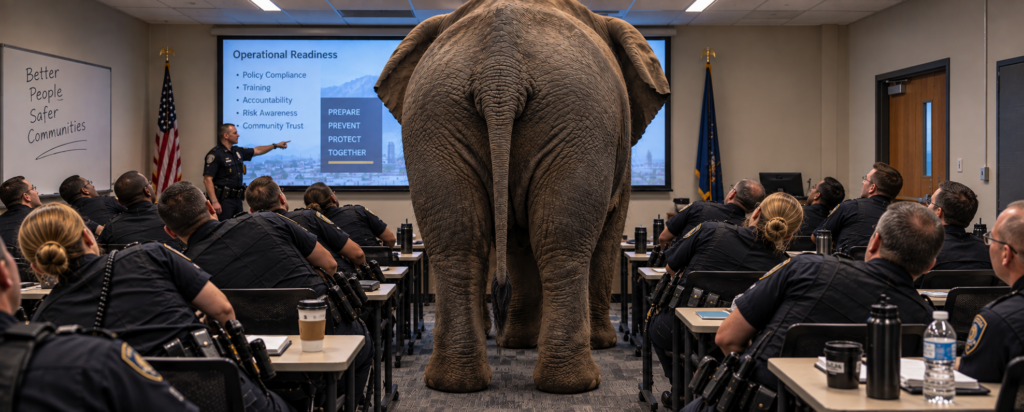


An “invisible condition,” sometimes called a hidden disability, is a physical, neurological, cognitive, or medical condition that is not immediately obvious to an observer but may affect behavior, communication, perception, or motor function. Invisible conditions can create major risks in law enforcement, since slowed or atypical responses, unusual movements, or difficulty with eye contact can be misread as defiance, intoxication, or guilt when they are actually manifestations of a disability or medical condition.
Common invisible conditions include:
- Hearing loss/deafness
- Autism spectrum disorder (ASD)
- Traumatic brain injury and cognitive impairment
- Alzheimer’s disease and dementia
- Epilepsy
- Diabetes (especially hypoglycemia)
- Mental health conditions such as PTSD, bipolar disorder, and schizophrenia
- Other intellectual and developmental disabilities
- Speech disorders
- Chronic pain or fatigue disorders
The U.S. Department of Justice (DOJ) reminds law enforcement and other public safety agencies that under ADA Title II, they must provide effective communication and reasonable modifications in policies and practices — a basic requirement that applies whether or not any state invisible condition law exists.
What Happens When Cops Assume
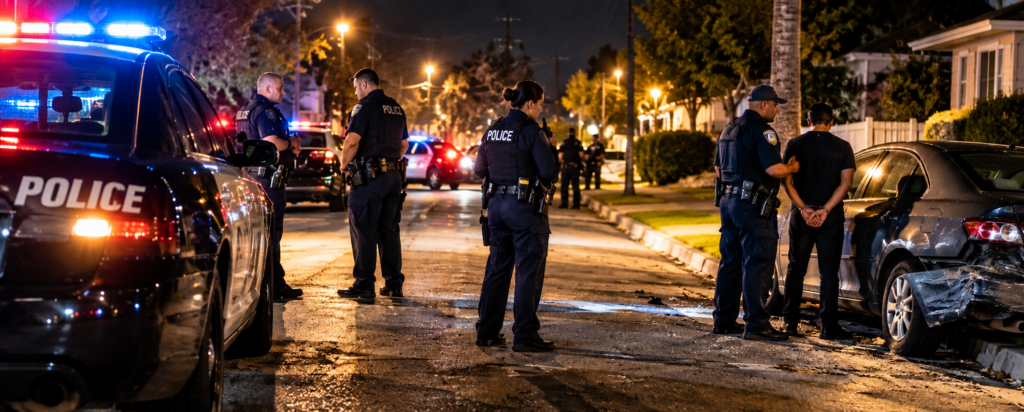
Unfortunately, even the most well-intentioned officers can make misjudgments when invisible conditions are involved. In high-stress encounters like traffic stops, welfare checks, and calls for erratic behavior, officers often must make quick judgments about safety and compliance. When someone moves oddly, seems confused, or doesn’t respond to verbal commands, it’s natural to interpret those cues through familiar frames: intoxication, defiance, or mental instability. Yet for someone with an invisible condition, those same cues may stem from medical or neurological realities and not voluntary misconduct.
The consequences of these misunderstandings can be profound — for the individual, who may be injured or traumatized, and for officers, whose credibility, safety, and agency reputation may be damaged.
Recognizing the potential for honest misreads is the first step toward preventing them. While some of the outcomes below may be extreme, they illustrate the potential escalation that can occur when officers misread cues indicating invisible conditions:
- Diabetic emergency mistaken for DUI. In April 2024, a retired sheriff’s deputy was pulled over while experiencing a severe hypoglycemic episode. Officers misinterpreted his slurred speech, confusion, and impaired motor control as intoxication and arrested him on suspicion of DUI. Prosecutors dropped the charges after toxicology tests later showed zero alcohol or drugs in his system, but only after the man spent seven months defending himself against allegations that stemmed entirely from low blood sugar.
- Deaf man tackled, tased, and jailed after not responding. In August 2024, Tyron McAlpin, a deaf Black man with cerebral palsy, was involved in a violent altercation with police officers in Phoenix, Arizona. McAlpin said he tried to communicate his deafness and disability, but officers proceeded with force, and prosecutors later dropped the charges. The case sparked outcry from the National Association of the Deaf (NAD) and others, citing failure to provide effective communication and violation of civil rights.
- Autism misread as drug intoxication. In 2017 in Buckeye, Arizona, an officer confronted a 14-year-old autistic boy who was cupping a hand to his mouth and manipulating a string, a behavior known as “stimming.” The officer mistakenly suspected inhalant use and detained him, injuring the teen. A jury cleared the officer of excessive force, but the victim later sued the city for allegedly violating his rights.
- Interaction with dementia patient results in death. In October 2021, police encountered 70-year-old Armando Navejas of El Paso, Texas, shirtless, walking toward an officer with a string of wooden blocks. An officer used an electronic control weapon on Navejas, who had Parkinson’s disease and dementia and had wandered away from home. Navejas suffered multiple facial fractures and later died in a rehabilitation facility.
These incidents differ in outcome, but they share a common thread: misinterpretation of disability-related cues under stress. They also underscore the need for reliable ways to alert responders to invisible conditions so they can try different intervention strategies.
“Awareness, patience, and informed communication can transform uncertain encounters into opportunities for compassion.”
Alerting on Invisible Conditions
For officers to respond safely and fairly, they must know who they are dealing with — and that can be incredibly difficult when a person’s medical condition or disability or isn’t immediately obvious. Also, in some circumstances, officers may also be experiencing a rush of adrenaline that may impair their perceptions and affect their decision-making. The examples above show how quickly these encounters can escalate, increasing risk to both the individual and to responding officers.
And that’s why a growing number of states (as well as advocacy groups) have proposed various ways to alert law enforcement officers to invisible conditions before or during an encounter. Each approach has the goal of giving police critical information early so they can slow the interaction, adapt their communication methods, and prevent misunderstandings that might otherwise turn a routine stop into a tragedy.
- Indication on Driver’s License or ID. Some states allow a voluntary indicator — such a symbol or a notation like “Special Communication Needs” or “Hidden Disability” — on a person’s driver’s license or state-issued ID. For example, Colorado authorizes a discreet symbol if the disability may interfere with communication with a law enforcement officer. Virginia and Washington provide a textual indication of special communication needs, which people can opt to have added to their license or ID.
- Handover cards. Self-disclosure or “handover” cards offer a straightforward way to alert officers to an invisible condition. These wallet-size cards have been used by members of the Deaf community for decades. (“I am Deaf and cannot hear you; please write or text.”) However, a person in crisis may not be able to present the card, and officers must be trained to recognize and respect it.
- Specialty license plates. A few states have created specialty license plates (such as “Autistic & Neurodivergent”) which can offer a very visible cue to an officer conducting a traffic stop.
- Vehicle registration flags. Several states have added indicators in state vehicle databases that alert to a possible invisible condition when a vehicle’s plate is run. For example, Ohio and Florida both add a marker to their state registration database so officers receive an alert during plate queries.
- Multiple indicators. Some states use more than one method to get information about a driver in front of law enforcement. For example, Utah’s invisible condition program adds a symbol to a driver’s license and also a flag in the state’s vehicle registration database.
Pros and Cons of Alert Strategies
Each of the methods above comes with tradeoffs in visibility, privacy, and practicality.
A symbol on a driver’s license or ID (or a handover card) is probably the simplest and most direct option, but it only helps if an officer physically sees the card and notices the symbol. That means the officer must be in contact with the person, often after a misunderstanding may already be in progress. If the person is too frightened, disoriented, or injured to produce a card or license, the indicator provides no benefit.
In contrast, while visible vehicle cues such as specialty license plates can alert officers earlier in an encounter, they also raise legitimate concerns about privacy and stigma. Individuals with invisible conditions (or their families) may worry about unwanted attention or even harassment for being “outed” in public as having a medical or neurological condition.
Database or registration-based flags solve some of those issues by keeping the information out of public view, but they introduce others. For example, what happens if a car’s registration carries an invisible-condition flag, yet the driver that day isn’t the person with the condition? Similarly, these systems depend on officers actually checking records before they act — something that can’t always happen during a fast-moving field encounter.
Finally, these strategies are often unhelpful during non-vehicle interactions such as calls for service, pedestrian stops, or welfare checks. In those cases, education remains essential. Ultimately, every alert method is a partial solution; real safety comes from combining tools with empathy, awareness, and effective officer training.
National Efforts: Legislation and Advocacy
Across the country, the movement to help law enforcement recognize invisible conditions is coalescing into a national conversation — one shaped by advocacy groups, professional associations, and legislators. The goal is to prevent tragic misunderstandings by ensuring first responders know when they’re interacting with someone whose disability or medical condition affects communication or behavior.
At the forefront of this movement is the Invisible Disabilities Association (IDA) and its National Disability ID Initiative. The IDA advocates for a standardized, discreet, voluntary symbol that could appear on driver’s licenses, state IDs, or registration systems nationwide. Alaska was the first state to adopt a version of this symbol, followed by Colorado.
On the legislative front, federal lawmakers are also taking notice. The Disability ID Act of 2022 (H.R. 7217) sought to establish a grant program enabling states to create voluntary disability identifiers and to fund related officer training, but the bill did not advance to a vote. Despite its short life, the proposal reflected growing bipartisan recognition that law enforcement encounters with people who have invisible conditions often end badly — not from malice, but from misunderstanding — and that simple identifiers, when properly used, could save lives.
Meanwhile, professional associations are wrestling with how best to balance information-sharing and privacy. The American Association of Motor Vehicle Administrators (AAMVA), the national body representing state driver licensing agencies, has taken a policy position opposing visible notations on ID cards, warning that “visible indicators could be misused to discriminate against or otherwise harm the credential holder.”
State-Level Invisible Conditions Laws
Unless and until federal legislation is passed, efforts in this arena fall to the states. Below is a survey of relevant state laws relating to invisible condition alerts. While this list is intended to be comprehensive, legislation and rulemaking in this area are changing fast. Be sure to consult your agency’s policies and legal counsel to verify the current requirements in your jurisdiction.
- Alaska. Under a memorandum of understanding with the Invisible Disabilities Association, the state adopted an invisible disability designator (an “i” symbol) on state driver’s licenses and IDs. Relevant statues: Alaska Statute 18.65.310(m) and Alaska Statute 28.15.111(d).
- Colorado. Created a disability symbol on driver’s licenses and IDs for individuals having a condition that may interfere with communication with a peace officer. The state law aims to represent all disability types, and awareness training is built into state requirements for peace officers. Relevant statue: Colorado House Bill 21-1014.
- Florida. Requires the Florida Highway Safety and Motor Vehicles (FLHSMV) department to add a diagnosis designation field to motor-vehicle registration records, a database flag that is displayed to law enforcement to support communication awareness during emergencies or other encounters. Relevant statute: Florida HB 341 (2024).
- Ohio. Allows for voluntary enrollment linking a communication disability to specific license plates via the state’s Law Enforcement Automated Data System (LEADS), so officers receive an alert on a tag inquiry. Relevant statute: Ohio Revised Code § 3304.23.
- Maryland. Provides for a voluntary butterfly symbol on state driver’s licenses, IDs, and moped permits to denote non-apparent disabilities; includes training mandates and privacy limits (for example, the information can’t be used by insurers). Relevant statute: “Eric’s ID Law,” House Bill 707/Senate Bill 618.
- New Hampshire. On request (and with physician certification) the state DMV may print a “medically recognized disorder” indication on an individual’s driver’s license or ID. Relevant statute: New Hampshire Revised Statutes § 263:41-b.
- South Carolina. The state’s original law allows an indicator for an autism diagnosis on state licenses, IDs, and driver records. A later law authorized special motor vehicle plates for vehicles owned by someone who is autistic or neurodivergent (or a parent of someone who is). Relevant statutes: Act 19 (R28, S276), S.B. 344 (2017-2018), C. Code § 56-3-7100 (2024), Act No. 178 (H.4674).
- Tennessee. On request, a person may include language or a symbol on their driver’s license or ID indicating an acquired brain injury or intellectual or developmental disability. Parents and guardians can make this request for minors. Relevant statute: Tenn. Code §55-50-307.
- Texas. The “Texas Driving with Disability” program offers a voluntary “communication impediment” code on the front of state driver’s licenses and IDs and on vehicle registrations so officers see it on a plate inquiry. Relevant statute: Transportation Code §521.142.
- Utah. The state adds a symbol to driver’s licenses and IDs for conditions ranging from autism and hearing loss to epilepsy and diabetes. Applicants submit an attestation from a health professional. The state also adds a flag to law enforcement databases used by dispatch. Relevant statute: Utah Code § 58-1-604.
- Virginia. Permits an indication of special communication needs (expressly includes hearing loss and autism spectrum disorders) on driver’s licenses and IDs, with a physician’s statement required. Relevant statute: Va. Code §46.2-600.1.
- Washington. Authorizes medical alert, developmental disability, or deafness designations on driver’s licenses and IDs for military veterans, and explicitly allows self-attestation. Relevant statute: RCW 46.20.161.
Note that several other jurisdictions offer niche tools such as visor cards for Deaf/hard-of-hearing drivers (Michigan, Texas) and so-called “blue envelope” kits for autistic drivers to help facilitate self-disclosure during traffic stops. These operate alongside or independent of licensing/registration solutions.
Timely law enforcement content in your inbox: SUBSCRIBE NOW!
What Agencies Can Do
At the agency level, invisible conditions are first and foremost a policy and training issue. State and local POST-certified academies should already be providing the basics on how to recognize and respond to autism, dementia, and other invisible conditions. But 15 minutes in a classroom is not enough, especially while new recruits are drinking from the training fire hose, and longtime personnel may be unaware of this relatively new topic.
To better protect both officers and community members, agencies should develop their own training to educate both existing and incoming officers and supervisors how to recognize and properly respond to invisible condition flags and cues. Since there’s obviously no way to teach law enforcement officers to diagnose, training should focus on visible behaviors and encouraging officers to recognize that all may not be as it seems in any given encounter. This training should be both mandatory and well documented.
Agencies should also ensure robust invisible condition awareness is built into field training as well as their regular in-service training schedule. This could take the form of short refreshers, roll-call training, and scenario-based exercises to keep officers familiar with the kinds of behaviors they might see and the alternative explanations (and tactics) that go along with them.
It’s important for trainers and supervisors to frame invisible condition training as a duty-to-intervene issue. If one officer misses the cues, a backup officer might catch them — if they’ve been encouraged and empowered to speak up. It’s not second-guessing to say, “Hey, this could be medical,” or “He might be deaf/autistic; let’s slow down.” Finally, agencies should ensure their policies are aligned with both state invisible condition laws and current best practices, including how and when officers should check for flags, what they should do when a flag appears, and how to document suspected invisible conditions and medical crises.
Clear policy plus consistent training gives officers permission — and practical knowledge — to choose caution, communication, and problem-solving over assumptions.
If your agency subscribes to an online platform like Lexipol Online Training, you may be able to supplement your agency-developed training with courses that cover the basics, such as autism awareness, responding to incidents involving elderly subjects, and more.
What Officers Can Do
Invisible laws and indicators can help, but they’re only part of the solution. At the moment of first contact, an officer’s awareness, patience, and communication skills make the greatest difference. Whether or not a state has formal alert systems, every officer can take practical steps to learn to recognize potential invisible conditions, adapt their approach, and prevent misunderstandings from escalating.
Here are a few key dos and don’ts — simple, field-ready practices that promote safety, compliance, and respect for everyone involved.
Dos:
- Acknowledge the alert, if applicable, (on the card, plate, or registration). Treat it as a cue to slow down and adapt, not to prejudge.
- Adapt physical posture and distance to reduce stimulus and anxiety. Try to minimize overlapping commands.
- Ask about medical issues such as diabetes and seizure disorders early when behavior and context don’t align.
- Scan for cues such as confusion, unusual movements, stimming, slow or no verbal response, obvious lip-reading. Remember that not all noncompliance is willful.
- Use clear, concrete language. When possible, give extra processing time. Break instructions into single steps and verify understanding before moving on.
- Ask about communication preferences: “Would it help if I wrote this down?” “Do you prefer sign language or an interpreter?” “Is there a medical condition I should know about?”
- Offer alternate channels of communication, such as writing, gestures, text, or a qualified interpreter.
- Call for appropriate support (e.g., crisis intervention officer, a qualified interpreter, EMS) when signs suggest medical crisis (diabetes, seizure) or communication barriers (deafness, autism).
- Document adaptations (what you saw, what you changed, who you requested) to help build learning and legal defensibility.
- When possible, adopt a calm demeanor and limit sensory overload such as sirens, shouting, and rapid movements.
- Consider self-disclosure tools. If a person presents a wallet/visor card or “blue envelope,” read it and adjust your approach accordingly.
- When in doubt, call EMS. It’s better to rule in a medical crisis than escalate a misunderstanding.
- Document your adaptations. This is good for the person and good for the record.
Don’ts:
- Don’t immediately equate delay with defiance or silence with refusal.
- Don’t ignore a visible symbol or flag — if it’s there, it’s there for a reason.
- Don’t skip medical assessment when signs point to crisis (e.g., slurred speech plus sweating could indicate hypoglycemia, not alcohol).
- Don’t rush to use of force based on ambiguous behavior. Time and clarity are tactical tools.
- Don’t dismiss handover cards or written notes; they may be the person’s only reliable way to communicate.
- Don’t assume intoxication without considering medical emergencies, especially when physical cues suggest hypoglycemia or seizure activity.
- Don’t broadcast medical details beyond those who need to know.
Bringing Awareness to the Invisible
As policing continues to evolve, understanding and accommodating invisible conditions has become an ethical and operational imperative. The many examples of failure clearly demonstrate how easily a lack of awareness can turn an ordinary encounter into a preventable tragedy for citizens and officers alike. The challenge isn’t that officers act in bad faith, it’s that they often must make split-second decisions — often while hyped up on adrenaline — without adequate context to interpret what they see. By implementing systems that alert first responders to invisible conditions, and by emphasizing training and empathy, law enforcement agencies can replace guesswork with understanding.
Efforts at both the state and national level reflect a growing recognition that communication is as critical to officer safety as it is to community trust. Whether through a discreet symbol, a vehicle-registration flag, a self-disclosure card, or a notation in a database, the purpose is the same: to give officers the information they need to slow down, reassess, and engage safely. The debate over how best to share that information is both healthy and necessary. It ensures that privacy rights are preserved even as safety and accessibility improve.
Ultimately, invisible conditions remind us that not every challenge is visible and not every hesitation is defiance. Officers, agencies, and policymakers have a responsibility to do what they can to bridge the gap between perception and reality. Awareness, patience, and informed communication can transform uncertain encounters into opportunities for compassion, turning “What’s wrong with you?” into “How can I help?”
- Blog Articles