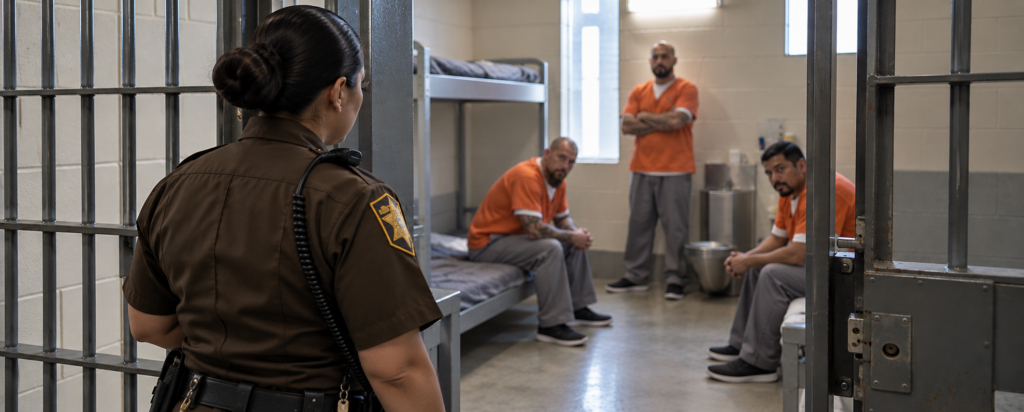
Behavioral health calls are now a regular part of daily operations in public safety. They are complex and often among the highest-risk incidents agencies face. Yet many departments still rely on fragmented policies, unclear roles, and inconsistent coordination when responding.
That challenge is the focus of Lexipol’s recent webinar on unifying behavioral health crisis response, featuring Dr. David Tan, chief medical officer and EMS medical director, and Dr. Cherylynn Lee of the Santa Barbara County Sheriff’s Office Behavioral Sciences Unit.
Together, they explore what it takes to move from siloed response models to coordinated, cross-disciplinary systems that improve outcomes for responders and the individuals they serve.
A System Problem
No single discipline can effectively manage behavioral health crises alone. Law enforcement, EMS, fire, and clinicians all bring different expertise to the scene. When those roles are not aligned, gaps emerge. Those gaps can lead to miscommunication, delayed care, or unnecessary escalation.
“Coordinated responses need to be a real thing instead of an idea on paper.”
Dr. Lee emphasizes that behavioral health calls are dynamic and often unpredictable, requiring input from multiple perspectives at once. A law enforcement-only or EMS-only response model fails to reflect the reality of what is happening on scene. Dr. Tan highlights the medical complexity of these calls, noting that behavioral emergencies often include underlying conditions that can be missed without proper clinical assessment.
For leaders, the takeaway is clear. Improving outcomes starts with designing systems that assume coordination, not independence. As Dr. Tan emphasizes, “coordinated responses [need to be] a real thing instead of an idea on paper.”
Here are seven takeaways from the webinar:
1. Clear roles on scene reduce confusion and risk
While collaboration is critical, it only works when each discipline understands its role. Confusion about responsibilities on scene is a common failure point. Who is responsible for safety? Who leads medical care? Who communicates with the individual in crisis?
Without clarity, responders may duplicate efforts or, worse, overlook critical tasks.
Dr. Lee highlights the importance of defining these roles in policy and reinforcing them through training. Law enforcement plays a key role in scene safety. EMS evaluates and manages medical needs. Behavioral health professionals focus on de-escalation and psychological support.
These roles are complementary, not interchangeable.
For agency leaders, this means policies and training must go beyond general guidance. They must clearly articulate expectations for each discipline and ensure those expectations are consistently applied in the field.
2. Training must prepare responders for real-world complexity
Training is another area where many agencies fall short. Too often, training is either discipline-specific or overly theoretical. The panel argues for a more practical, integrated approach that reflects the realities of behavioral health calls.
Dr. Tan emphasizes the need for responders to understand both medical and behavioral indicators. A subject experiencing a mental health crisis may also be dealing with substance use, trauma or a medical emergency.
At the same time, Dr. Lee emphasizes that training must reinforce, not blur, professional boundaries. “Each stakeholder needs to be responsible for a key component of that cross disciplinary training.” Cross-training should build awareness and coordination, not turn every responder into a generalist.
Effective training should focus on:
- De-escalation techniques that work across disciplines
- Recognizing medical versus behavioral symptoms
- Understanding how each role contributes to the overall response
When training reflects real-world conditions, responders are better equipped to make decisions under pressure.
3. Communication gaps create preventable failures
Even when the right people are on scene, poor communication can undermine the response. The panel points to common breakdowns, such as failing to share critical information about a subject’s condition, prior actions taken, or safety concerns.
Continuity of care depends on accurate, timely information sharing between responders. Without it, medical providers may not have the full picture they need to make informed decisions.
Dr. Lee adds that communication is not just about information transfer. It is also about an aligning approach. “We have to be operating from the same framework.” If one responder is attempting de-escalation while another escalates the situation, the outcome can quickly deteriorate.
Leaders should view communication as a core operational skill, not a soft skill. Policies, training, and after-action reviews should all reinforce the importance of clear, consistent information sharing.
4. Co-responder models are effective, but not one-size-fits-all
Many agencies are exploring co-responder models, pairing law enforcement with clinicians or EMS personnel. The panel agrees these models can be highly effective, but only when they are designed with local realities in mind.
Dr. Lee explains that no two communities have the same resources, call volume, or needs. A model that works in a large urban area may not translate to a rural jurisdiction.
Dr. Tan highlights the importance of flexibility and simply taking the first step: “Start with a conversation together in a room and map out what kind of model you want.” Some agencies may rely on full-time co-responder teams, while others use on-call clinicians or partnerships with community organizations.
What matters most is not the specific model, but how well it integrates with existing systems. For leaders, the goal should be to build a response framework that fits their agency’s capabilities while still prioritizing coordination and access to behavioral health expertise.
5. Policy and legislation must reflect operational reality
As behavioral health response evolves, agencies are also navigating shifting legislative and public expectations. Calls to remove law enforcement from crisis response entirely have gained attention in some areas. At the same time, new laws are reshaping funding and response requirements. The panel cautions that policy decisions made without operational input can create unintended consequences.
Dr. Tan emphasizes that safety must remain a priority. While clinicians play a critical role, there are situations where law enforcement presence is necessary to protect everyone involved.
Dr. Lee adds that agency leaders must engage in these conversations proactively. Educating policymakers about what actually happens on scene is essential to developing realistic, effective policies. Rather than reacting to change, agencies should help shape it.
6. Understanding HIPAA and information sharing is critical
Another area of confusion addressed in the webinar is HIPAA and how it applies to public safety. Many responders hesitate to share information due to concerns about privacy violations. The panel clarifies that HIPAA does allow for certain types of information sharing, particularly when it is necessary for treatment, safety or coordination of care.
Dr. Tan explains that misunderstanding these rules can hinder effective response: “The thing they have in common is that something got missed in communication …” When responders withhold information unnecessarily, it can impact both decision-making and outcomes. Leaders should ensure their personnel understand what HIPAA does and does not restrict. Clear guidance and training can eliminate hesitation and improve coordination.
7. Moving from Silos to Synergy
Throughout the conversation, a consistent message emerges. The challenges in behavioral health response are not due to a lack of effort or commitment. They stem from systems that were not designed for the complexity of these calls.
Breaking down silos requires intentional action.
It means aligning policy with practice, training responders together, clarifying roles, and building systems that support real-time coordination. It also means recognizing that behavioral health response is not static. It will continue to evolve as community expectations, legislation, and resources change.
For public safety leaders, the path forward is not about choosing one model over another. It is about building a flexible, integrated approach that prioritizes safety, communication, and collaboration.
Final Thoughts
Behavioral health emergencies test every part of a public safety system. They require technical skill, emotional intelligence, and seamless coordination across disciplines.
As Dr. Lee and Dr. Tan make clear, improving response is not about any single change. It is about bringing all the pieces together. When agencies move from silos to synergy, they create a system that is not only more effective, but also more resilient. And in today’s environment, that level of readiness is no longer optional.
To hear the full conversation and explore these insights in more detail, watch the on-demand webinar here: https://one.lexipol.com/l/1088082/2025-11-17/f5r31n
- Blog Articles