Reasonable suspicion analysis depends on the totality of the circumstances, not isolated facts viewed separately. In D.C. v. R.W., the U.S. Supreme Court reaffirmed that officers may rely on commonsense inferences when evaluating suspicious behavior, including unprovoked flight, evasive actions, and unusual conduct during a late-night encounter. The ruling matters for law enforcement officers because it reinforces that courts must evaluate the full context of a stop rather than dismissing individual observations one by one.
District of Columbia v. R.W., 146 S.Ct. 1069 (2026)
In this recent decision, the United States Supreme Court returned to a principle officers know instinctively but courts sometimes forget: Reasonable suspicion is built from the whole picture, not picked apart piece by piece.
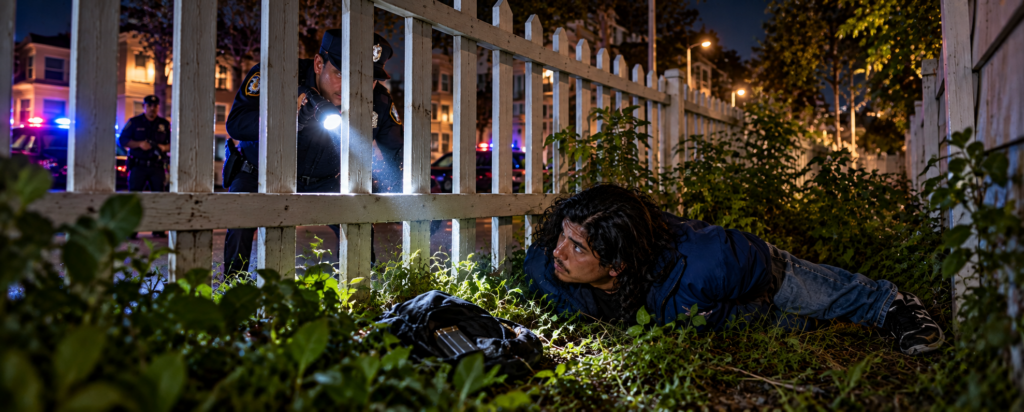
The facts were simple and familiar. In Washington, D.C., around 2:00 a.m., an officer responded to a dispatch about a suspicious vehicle. As he pulled into the lot, two occupants immediately fled from the car — “unprovoked.” The driver, instead of reacting like most people would, began backing out of the parking space while a rear door remained open. The officer stopped the vehicle, drawing his weapon and ordering the driver to “put his hands up.” R.W., the driver, was a minor at the time of the incident. After a search of the vehicle, R.W. was charged with unauthorized use of a motor vehicle and felony receipt of stolen property.
The trial court denied R.W.’s motion to suppress the evidence obtained from the seizure. However, the District of Columbia Court of Appeals reversed, concluding there was no reasonable suspicion.
“The question is not whether each fact is innocent in isolation, but rather whether all the facts together create reasonable suspicion.”
The legal standard comes from prior U.S. Supreme Court cases like United States v. Arvizu (534 U.S. 266 (2002)) and Terry v. Ohio (392 U.S. 1 (1968)): Reasonable suspicion exists when, under the totality of the circumstances, an officer has a particularized and objective basis to believe criminal activity may be afoot.
The phrase “totality of the circumstances” is critical to the analysis. It means courts are not allowed to:
- Evaluate each fact in isolation.
- Reject individual facts one by one.
- Rebuild the analysis using only what remains.
In other words, the Supreme Court is emphasizing there is no divide-and-conquer analysis.
The court of appeals tried to break the case into parts. It first discounted the dispatch call, then discounted the passengers’ unprovoked flight. Instead, the court focused on the late hour and the vehicle movement, considering whether those remaining facts were enough to support reasonable suspicion.
That approach feels methodical, but it is also wrong. Once you strip away context, almost any situation can be made to look innocent. And when this case went to the U.S. Supreme Court, the judges said exactly that: You cannot “excise” the most important facts and then pretend they don’t exist.
When you put the facts back together and use the Supreme Court’s analysis, the picture changes. It becomes a dispatch about a late-night suspicious vehicle, two occupants fleeing at the sight of police, and the driver behaving oddly (backing up with the door still open). Any one of those facts, standing alone, might be innocent. But taken together?
As the Supreme Court has long recognized in Illinois v. Wardlow (2000), unprovoked flight from law enforcement is strongly suggestive of wrongdoing. And when combined with other unusual behavior, it becomes even more significant.
The Court emphasized something officers understand from experience: People in a vehicle often act in a common enterprise. When passengers bolt and the driver reacts in a hurried, unnatural way, it is reasonable to infer they are connected — and trying to avoid punishment for wrongdoing. This just involves applying common sense, not technical perfection.
The Court leaned into the point that reasonable suspicion is based on “commonsense judgments and inferences about human behavior.” This is not a mechanical or laboratory analysis. Officers are not required to rule out innocent explanations, identify a specific crime, or be certain they are right. They are allowed to draw practical, real-world inferences. In fact, that’s expected.
Here, the inference was straightforward. Something shady was going on, and the people involved were trying to avoid police contact. That was enough, according to the Court.
The key lesson here is that context matters. The Court put it plainly: “The whole is often greater than the sum of its parts — especially when the parts are viewed in isolation.” That line ought to be spoken at every suppression hearing and printed in every suppression brief.
Defense arguments often try the same move:
- “Running isn’t illegal.”
- “Backing up a car isn’t illegal.”
- “Being out at 2:00 a.m. isn’t illegal.”
All of that is true, but it’s all beside the point. The question is not whether each fact is innocent in isolation, but rather whether all the facts together create reasonable suspicion.
Timely legal analysis on law enforcement-related cases: SUBSCRIBE NOW!
There are a few practical takeaways worth keeping in your pocket:
- Document everything you observe. Small facts matter, especially when combined with other small facts. This includes movements, timing, and reactions to police presence. Individually, these could seem like minor details. Collectively, they make for powerful “articulable facts.”
- Don’t ignore behavior that doesn’t make sense. Courts recognize that unusual or unnatural behavior can be meaningful. In this case, officers saw sudden flight, panicked reactions, and actions inconsistent with normal conduct. Those are not random details — they are clues.
- You don’t have to rule out innocent explanations. This comes straight from the case law. Reasonable suspicion does not require eliminating innocent possibilities. If it did, traffic stops would rarely be lawful.
- Think in terms of the “story,” not isolated facts. What did the scene look like as a whole? If you can explain the encounter as a coherent sequence of suspicious behavior, you are on solid ground.
This case is a reset button for cops, courts, defenders, and prosecutors. It reminds courts (and reinforces for officers) that reasonable suspicion is not a checklist. It is a holistic judgment based on real-world experience.
When officers see flight, evasion, and unusual behavior — especially in combination — they are not required to ignore it. They are allowed to act. And when they do, the Fourth Amendment does not stand in their way.
- Blog Articles