Otero v. Kane, 2025 WL 3493890 (3rd Cir. 2025)
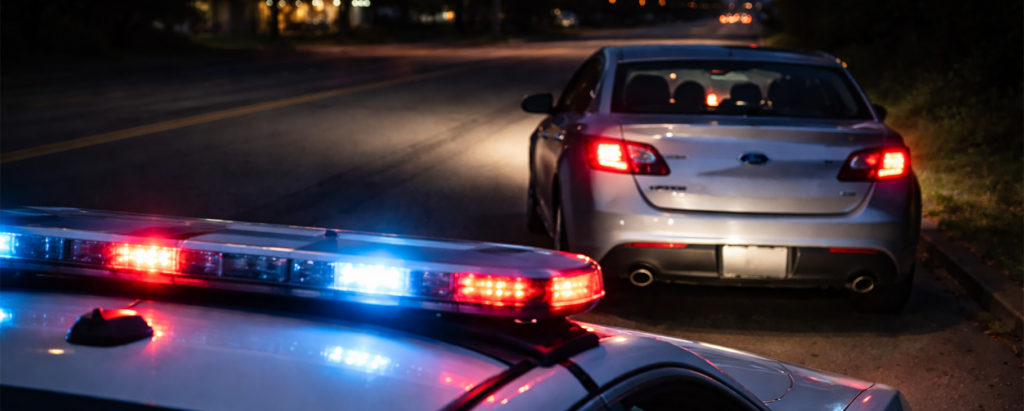
In Philadelphia, two officers responding to a call about drug dealing saw a large crowd gathered around an SUV and someone handing out small items to the crowd. Suspecting they were witnessing drug transactions in real time, an officer got out of the patrol car and walked toward the SUV. When the suspected dealer, Tahir Ellison, made eye contact with the officer, Ellison drove off.
The officers pursued Ellison at normal speeds for seven blocks. Then Ellison ran a red light, drove the wrong way down a one-way street, and sped up to nearly double the 30-mph speed limit. The officers continued to pursue, lights and siren on, and at nearly the same speed as Ellison. The pursuit lasted just 39 seconds and ended when Ellison crashed into a car driven by Virgen Martinez, killing her. Ellison later pleaded guilty to third-degree murder, aggravated assault, and driving under the influence of marijuana.
“The clock starts when, in the totality of the circumstances, an event occurs that requires officers to decide whether to pursue a suspect dangerously.”
Martinez’s son, Joshua Otero, sued the officers and the city, claiming the officers’ high-speed chase in a densely populated area violated Martinez’s 14th Amendment right to substantive due process. Otero pointed to a department policy that barred pursuits except to “prevent death or serious bodily injury,” “stop a suspect who attempted a forcible felony,” or “stop a suspect who has a deadly weapon.” The officers petitioned the trial court for partial summary judgment based on the absence of intent to harm and on qualified immunity. The trial judge found no evidence of intent to harm but denied summary judgment on both the constitutional and qualified immunity arguments.
The court of appeals reversed the trial court and granted the officers partial summary judgment. The court explained a three-part test for whether an officer is liable for harm directly caused by a fleeing suspect to a third party. The analysis turns on the question of how much time the officer had to act in response to the suspect’s action:
- First, when a situation is “hyperpressurized, requiring split-second decisions, the officer is not liable unless he intended to harm.”
- Second, if the officer had “hours or minutes to engage in hurried deliberation, the officer is not liable unless he consciously disregarded a great risk of serious harm.”
- Third, “if the situation was unhurried and left time for careful deliberation, the officer can be liable if he was deliberately indifferent to the risk of harm.”
The court noted most police chases fall into the first group, meaning officers are not liable unless they intended to harm, citing the landmark case of County of Sacramento v. Lewis (523 U.S. 833 (1998)). In that case, the U.S. Supreme Court held, “when officers pursue suspects in high-speed chases, their level of culpability does not shock the conscience unless they intend to harm suspects physically or to worsen their legal plight.”
In the trial court’s analysis regarding when to “start the clock,” the judge ruled the jury could decide to include the entire pursuit, including the seven blocks of driving at normal speeds and without Ellison running a red light. The appellate court said that this was an error; the clock starts when, “in the totality of the circumstances, an event occurs that requires officers to decide whether to pursue a suspect dangerously.” The panel also stated, “Officers cannot be liable for following a suspect lawfully and safely at an ordinary speed. Nothing about following a suspect or turning on police lights and a siren is inherently risky or dangerous to the public.”
Timely legal analysis on law enforcement-related cases: SUBSCRIBE NOW!
After Ellison ran the first red light and accelerated, the pursuit lasted less than 39 seconds, traveling only one-half mile. Because the officers did not intend to harm anyone, the court held, they could not be liable under the 14th Amendment. Though the officers likely violated an agency policy and may be subject to internal discipline, the court stated, “it does not matter that the officers violated police department rules.” Policy violations do not necessarily create constitutional violations.
The court also held qualified immunity applied, as no clearly established law prohibited the officers’ conduct under these circumstances. Acknowledging the tragedy of Martinez’s death, the court closed its opinion: “We ask not whether in hindsight they chose rightly, but whether they intended to cause harm.”
This case illustrates the liability principles involved in high-speed response and pursuit driving injuries. Even though the officers were not liable, we lose too many police officers and bystanders to high-speed crashes. Remember the third principle of Below100, an organization dedicated to eliminating preventable line-of-duty deaths: “Watch your speed.”
We’ve had cops in my family since 1869; two of my kids are cops. The first (and so far, only) officer in my family to be killed in the line of duty was gunned down in 1900. That year, 105 police officers died in the line of duty in the United States, though only one was killed in an automobile crash. Every year since, over 100 officers have died in the line of duty. Make it your goal that 2026 will be the first year in over a century that we hit the goal of “below 100.”
- Blog Articles