Castro-Reyes v. Bosque, 2026 WL 318559 (11th Cir 2026)
Mental health calls are rarely clean. Family members are scared. The subject is unstable. The house is chaotic. Everyone is talking at once. That is the backdrop in Castro-Reyes v. Bosque.
In Opa-Locka, Florida, Jafet Castro-Reyes had been acting erratically. His family feared he might hurt himself. Castro-Reyes proclaimed that he was “God” and he began trashing his apartment. Family members tied him up and called 911. They made clear he was not being violent toward them — they were just worried about his mental state. When officers arrived, they found Castro-Reyes tied up, wet, partially undressed, and clearly in some type of mental health crisis. Castro-Reyes told the officers to leave his apartment.
Florida’s Baker Act allows officers to take a person into custody for involuntary mental health evaluation if specific criteria are met — essentially, if there is reason to believe the person has a mental illness and poses a risk of serious harm to himself or others. Other states have very similar laws. The officers decided to detain Castro-Reyes under the Baker Act.
Authority to seize and authority to use force are two separate constitutional questions.
In the apartment, the bound Castro-Reyes was on his back. His cousin, Jose Varela, began untying him. Officer German Bosque placed one handcuff onto Castro-Reyes’s right wrist. Castro-Reyes told the officers, “I am God,” and he lay on the floor praying. The officers tried to flip Castro-Reyes onto his stomach to complete handcuffing. Castro-Reyes resisted and the officers called for addition back-up officers. Meanwhile, Varela continued trying to turn Castro-Reyes over. Varela put Castro-Reyes in a quasi-headlock to protect Castro-Reyes from the police activity he expected would take place. Castro-Reyes continued pleading to be let go and left alone.
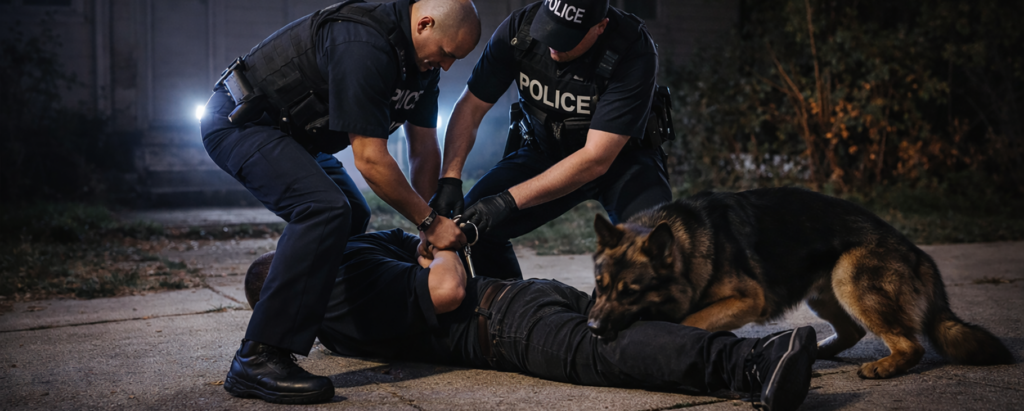
Three more officers arrived. The officers allegedly used physical strikes and repeated TASER deployments before dragging Castro-Reyes outside. He sustained injuries and was transported to the hospital. In the end, though, he was not charged with any crime. Castro-Reyes sued, claiming false arrest, excessive force, and assault and battery.
Timely legal analysis on law enforcement-related cases: SUBSCRIBE NOW!
There were two very different legal outcomes. First, the trial court refused to dismiss the false arrest claim. Later, the appellate court reversed as to the first two officers. Why? Because qualified immunity does not require actual probable cause. It requires “arguable probable cause.” That means reasonable officers in the same position could believe the Baker Act criteria were satisfied.
The officers at the scene knew the family had tied Castro-Reyes up out of fear for his safety. He had been behaving erratically. The situation involved mental instability and possible self-harm. That was enough for arguable probable cause under the Baker Act. If you have articulable facts supporting statutory mental health detention criteria, courts will not demand perfection in hindsight.
However, there was a different outcome on the claim for qualified immunity for excessive force. The appellate court affirmed the denial of qualified immunity to two other officers on excessive force claims. The question was not whether the officers had authority to detain him. The question was whether the force used was objectively reasonable under the Fourth Amendment. The court concluded a reasonable jury could find the force “grossly disproportionate” because the body worn camera video provided evidence of repeated TASER use, physical strikes, and dragging a partially restrained, mentally unstable person.
The court emphasized that clearly established law prohibits using significant force against a non-criminal, mentally ill individual who is not posing an immediate threat of serious harm. That principle was already established long before the Castro-Reyes case. Thus, the excessive force claims move forward to trial.
The court’s message is straightforward: An officer may have authority to detain under a law allowing emergency mental health detention. That does not automatically justify how much force you use to do it. Authority to seize and authority to use force are two separate constitutional questions.
Mental health subjects are not criminal suspects. When the underlying justification is welfare — not crime control — courts scrutinize force more closely. Repeated TASER deployments and strikes against someone in crisis, especially when the subject is restrained or partially restrained, invite a jury trial. “Arguable probable cause” is a forgiving standard. Excessive force is not. Proportionality still governs.
Discipline in mental health calls means separating these two questions in real time:
- Do I have authority to detain?
- How much force is actually necessary to do it?
- Webinars