United States v. Miller, 2025 WL 3440988 (8th Cir. 2025)
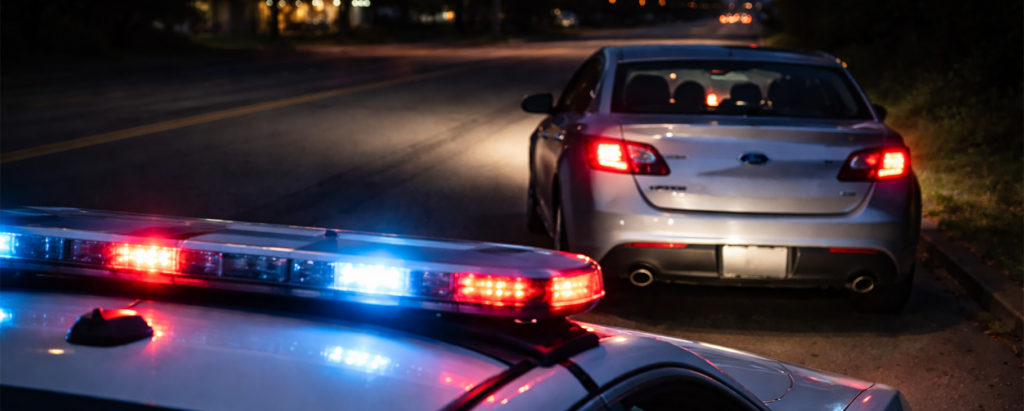
In Kansas City, Missouri, two officers saw a pickup truck with a broken headlight and an expired license plate. They stopped the truck and spoke with the driver, Alonzo Miller, and his female passenger. Miller provided his name and said he was not the truck’s owner. When he also provided the name of the owner, Cedric Woods, one of the officers recognized Woods’ name from prior encounters.
Miller produced his driver’s license, but he had no proof of insurance. Miller told the officers where he’d come from, and they recognized the location as an area known for prostitution, drug-related incidents, and trafficking of stolen property. Both officers had previously responded to the area Miller had just left.
Besides high call volumes, both officers knew of a suspected drug dealer either at or near the address provided by Miller. However, they had never managed to catch the dealer selling drugs from the address. As Miller spoke with the officers, one officer noticed Miller’s widened eyes, dilated pupils, trembling hands, and frequent scans of the truck. He was also dropping ash on himself from a cigarette he was smoking.
Based on the wide age difference between him and his passenger, the area, and the time of night, the officers considered whether Miller might be involved in some sexual crime. A computer check showed Miller was on parole for a second-degree felony assault and a gun crime connected to the assault. The officers decided to request Miller’s consent to search the truck.
“The officers’ detailed description of their observations about Miller and the circumstances surrounding the stop provided the foundation for a finding of reasonable suspicion.”
An officer walked back to the truck and told Miller what they had learned from the computer check. He informed Miller the truck registration was not valid but that he intended to only give Miller a warning for the lack of proof of insurance and the expired registration. Then the officer asked Miller if there was “anything illegal in the car or anything I should know about.” Miller said, “something under there,” while pointing under the front seat. The officer asked Miller whether “it would be okay if I took a look around.” Miller responded affirmatively.
The officer opened the driver’s door, directing Miller toward the rear of truck. However, Miller tried to move toward the front of the truck, behind the officer. This increased the officers’ suspicion because Miller could have fled or assaulted the officer more easily from that direction. An officer guided Miller to the truck bed and asked him, “Do you have anything on you, anything that’s going to poke, prick, or stab me?” Miller repeated that the officer should look under the seat.
The officer asked Miller to put his hands behind his back. He was not under arrest, the officer emphasized, but only being briefly detained. Miller started to present his left hand for handcuffing, then tensed up and pulled it away. Repeating that something illegal was under the seat, Miller removed his right hand from the truck bed and put it in his right coat pocket. Immediately, the officers heard a gunshot. Miller had discharged a gun while it was still in his pocket. Luckily, nobody was struck by the bullet.
The officers arrested Miller. Miller told them the gun belonged to his niece, and he was on his way to return it when the officers stopped him. Miller was subsequently indicted on one count of being a felon in possession of a firearm. He asked the trial court to suppress the evidence from the traffic stop and his arrest, claiming the officers unlawfully prolonged the stop and extended its scope, rendering his consent involuntary. He also claimed the officers lacked reasonable suspicion to believe he was armed and dangerous, making the frisk unlawful.
The trial court denied Miller’s motion to suppress the evidence, finding the stop to be lawful, that Miller’s consent to search was voluntary, and that the officers had reasonable suspicion to extend the stop and frisk Miller based on the totality of the circumstances. Miller conditionally pleaded guilty, appealing the denial of the suppression motion.
Citing eight facts, the trial judge ruled the officers had reasonable suspicion to extend the scope of the traffic stop and to frisk Miller:
- Miller was driving a truck registered to another person.
- He was on parole for a gun-related offense and violent felony.
- Miller had no proof of insurance for the truck.
- He was driving on a side street rather than a more populated street (and more direct route).
- Miller was noticeably nervous when dealing with the officers.
- Miller had just left a high-crime area.
- The stop occurred late on a cold evening.
- The age of Miller’s female passenger led to concerns that Miller could be involved in prostitution.
Miller argued each of the factors could have an innocent explanation. However, the U.S. Supreme Court has repeatedly said that reasonable suspicion must be assessed by examining the totality of the circumstances. The appellate court held the aggregate facts cited above provided reasonable suspicion to extend the length and scope of the traffic stop. Interestingly, the court did not even mention the fact that Miller had shot a live round through his jacket pocket!
Timely legal analysis on law enforcement-related cases: SUBSCRIBE NOW!
The court easily dismissed Miller’s claim that the officers did not have reasonable suspicion to ask Miller to get out of the truck so they could search it. Miller had explicitly told the officers there was something they should be concerned about under the truck seat. That alone provided a valid basis for removing Miller from the truck and searching it. The court also held the officers had reasonable grounds to frisk Miller. Regardless of what might have been under the seat, Miller’s unusual exit from the truck and movement to the front of the truck — coupled with his resistance when told to put his hands on the truck’s bed — reasonably led the officers to believe a frisk was necessary for officer safety.
The officers’ detailed description of their observations about Miller and the circumstances surrounding the stop provided the foundation for a finding of reasonable suspicion to expand the scope of the stop and venture into questions about what might be in the truck. I wonder whether the judges privately thought about just which of the four rules of firearms safety had to be violated for Miller to stupidly shoot through his pocket.
- Blog Articles