

When people hear the word mindfulness, they often picture someone sitting cross-legged on a remote mountaintop, eyes closed, breathing slowly while basking in the silence of nature. At the very least, many believe mindfulness requires quiet meditation in a dark, uncluttered room. But that’s a very limited interpretation of the concept.
For first responders, quiet rooms are rare and remote mountaintops are out of the question. You work in barely controlled chaos filled with sirens, radios, adrenaline, and unpredictability. Your attention is constantly being pulled outward: toward threats, toward victims, toward rules that must be followed and tasks that must be completed.
The idea of adding one more thing to your routine can seem downright unrealistic, especially a practice that (let’s face it) sounds pretty far out on the woo-woo spectrum. But mindfulness isn’t really about sitting still. In essence, mindfulness means paying attention on purpose, in the present moment, without an immediate, instinctive reaction.
It’s a skill. And like any skill, it can be acquired and honed — not just on a mountain peak or in a darkened room, but in the real world.
Here are some thoughts on how to practice mindfulness using four practical anchors: your body, your senses, your routines and your relationships.
“Mindfulness isn’t about escaping the job. It’s about staying steady inside it.”
1. Mindfulness in the Body: Resetting the Nervous System
“…The body and mind are not separate, and we cannot treat one without the other.”
— Candace Pert, neuroscientist and author
The most efficient access point to mindfulness is through your body. According to researchers at Washington University School of Medicine, “parts of the brain area that control movement are plugged into networks involved in thinking and planning, and in control of involuntary bodily functions such as blood pressure and heartbeat.” Because of this, calming the body is often the best way to calm the mind.
First responders spend much of their shift in some level of physiological arousal, a state often referred to as hypervigilance. Even when no specific threat is present, your nervous system tends to stay primed and ready to respond. Over time, that constant readiness can become your baseline.
Finding mindfulness in the body is about noticing your own hypervigilance and gently shrugging it off. Here are some techniques to try:
Breath as a reset. You don’t need five minutes; just one slow exhale. Try breathing in for four counts and breathing out for six. That longer exhale tells your nervous system it’s safe to downshift. Do it before you step out of your vehicle. Do it at a red light. Do it before walking into your house after a long shift.
Tension check. Do you find your shoulders tend to be scrunched up near your ears? Is your jaw clenched? Do you have a death grip on your steering wheel? Simply noticing your tension — and letting go of it — is a form of mindfulness.
Mindful movement. Try walking a few minutes after a rough call. Feel your feet hit the ground. During PT, choose one set where you focus fully on form, breath and muscle engagement instead of rushing. Even stretching your neck and hips while paying attention to sensation can help recenter your thoughts.
Mindfulness in the body isn’t about performance. It’s about awareness. The more aware you are of your internal state, the more choice you’ll have in how you respond.
2. Mindfulness in the Senses: Anchoring in the Present
“Mindfulness is the process of actively noticing new things.”
— Ellen Langer, Harvard University psychologist
When you’re on the job and in full first responder mode, you’re mostly concerned with the immediate past and the immediate future. Hyperawareness pulls your attention to two questions: “What just happened?” and “What’s about to happen?” Once a stressful situation is over, though, you can use your senses to bring you back to here and now.
Remember that you have five senses: sight, sound, smell, taste, and touch. Access them all to practice sensory mindfulness whenever you need to return to the present. Here are a few things to try:
The 5-4-3-2-1 reset. Pause for a moment to notice five things you see. Then four things you feel. Three things you hear. Two things you smell. One thing you taste. It takes less than a minute, and you can use this technique to disrupt spiraling thoughts after a difficult call or at the end of a stressful shift.
Single-sense focus. Pick one sound — the hum of an engine, static on the radio, footsteps in the hallway — and track it for 20 seconds. When your mind drifts, gently return. Learning to focus on a single sensory input can help you build mental control.
Temperature and texture. Feel the cool air on your face. Notice the weight of your gear. Pay attention to how your boots feel on concrete versus grass. While this may sound simple, it can also be powerful. Attention grounded in the senses reduces negative thoughts and improves emotional regulation.
Your job requires you to be constantly scanning your environment for threats. Mindful sensing helps you pay attention to neutral sensory details that help you regulate instead of react.
3. Mindfulness in Routines: Turning Ordinary Moments into Practice
“While washing the dishes, one should only be washing the dishes.”
— Thích Nhất Hạnh, Buddhist monk and peace activist
One big fallacy about mental health is that we don’t have enough time to “waste” on improving it. With our attention constantly being yanked in all directions, it feels like chances to concentrate on higher functions are few and far between. But the truth is, you don’t need extra time. You just need intention.
First responders have so many built-in routines: gear checks, report writing, shift changes, meals, post-call cleanup. These are all opportunities for micro-mindfulness:
One-tasking. During one routine task per shift, commit to focusing only that task. If you’re writing a report, just write. If you’re checking equipment, focus on the details. When your mind jumps ahead, gently bring it back. That act of returning is the practice.
Transition rituals. Before you walk into your home after a shift, pause for one breath. Notice the shift from “on duty” to “off duty.” Actually flip a toggle in your mind. This small boundary helps keep job-related stress from spilling over into your family life.
Mindful eating. For the first three bites of a meal, slow down. Notice the texture, flavor, temperature. Then eat normally. It’s not about perfection, but more about interrupting the automatic.
Red-light reset. When you’re in your work vehicle, the next time you stop at a light, drop your shoulders and exhale slowly. Make it a habit to do this at least once an hour while you’re on shift.
Mindfulness built into routine moments becomes sustainable. It’s less about carving out time and more about reclaiming it.
4. Mindfulness in Relationships: Presence as Protection
“Connection is why we’re here; it is what gives purpose and meaning to our lives.”
— Brené Brown, researcher, lecturer, author, and motivational speaker
According to a longitudinal study that monitored the health of 268 Harvard students for over 80 years, strong social connections are most important predictor of long-term health and increased longevity, often outweighing factors like intelligence, social class, or genetic predisposition. Other research has reinforced the notion that social connections are critical for both physical and mental health. But connection requires presence.
In high-stress public safety professions, it’s easy to sit next to someone and not truly engage. Mindfulness in relationships means noticing your internal state while staying open to connections with others. Try these tips and see if they help:
Two-minute check-in. Ask a coworker, “How are you, really?” Then listen without offering feedback or solutions. Notice if you feel the urge to interrupt, solve, dismiss. Let the silence sit for a second longer than feels comfortable.
Repair quickly. If you snap at someone, pause and say, “I’m on edge. That wasn’t about you.” Mindfulness is often about noticing reactivity and choosing differently. The more you recognize these moments, the less likely you will be to jump down someone’s throat.
At home, put the phone down. Five minutes of undivided attention with your partner or kids builds more resilience than sitting next to them and doomscrolling. Yes, you may get antsy leaving your phone in the other room, but it’s a feeling you can overcome with practice.
Maintaining intentional presence in relationships helps strengthen connection while also training you to notice your own emotional shifts.
Isolation often creeps in quietly. Mindfulness in relationships helps you catch it — in yourself and in others.
Mindfulness and the Demands of the Job
First responders are trained to exert their authority, to establish and maintain control. Mindfulness is about learning to regulate yourself. That includes your thoughts, your actions and reactions, and your connections with others.
Developing and amplifying your own mindfulness will increase your emotional awareness, impulse control, and decision-making (especially under stress). It’ll also boost your long-term resilience and smooth your transition between work and home. It doesn’t require changing who you are. Rather, it requires noticing what’s happening inside you before it spills outward.
And perhaps most importantly, it’s portable. You can practice it in a patrol car, in an engine bay, in a hospital hallway or in your own driveway. It’ll make you a more effective first responder as well as a better person.
Tip Sheet: Wellness That Works: DOWNLOAD NOW!
A Final Word About Meditation
Throughout this discussion, we’ve focused on developing mindfulness without practicing meditation. That’s because meditation is the most obvious pathway to mindfulness, and we wanted to call attention to other ways to get similar results.
Meditation, simply put, is structured mindfulness practice. It helps develop the same skills described above: attention, awareness and emotional regulation.
Research has shown that consistent meditation practice can reduce stress, improve focus, enhance emotional regulation and support overall mental well-being. Even five to 10 minutes per day can make a difference over time.
But if sitting still isn’t your style (on a mountain peak or otherwise), try the techniques above instead. Start with a cleansing breath at a stoplight. Or a solitary, mindful walk around the station. Or an honest check-in conversation with someone you trust. If you eventually decided to add meditation as another way to keep yourself centered, so much the better.
Mindfulness isn’t about escaping the job. It’s about staying steady inside it. You already train your body for performance. You already train your skills for maximum effectiveness. Mindfulness trains your attention — so you can respond, not just react.
And in your line of work, that difference matters.
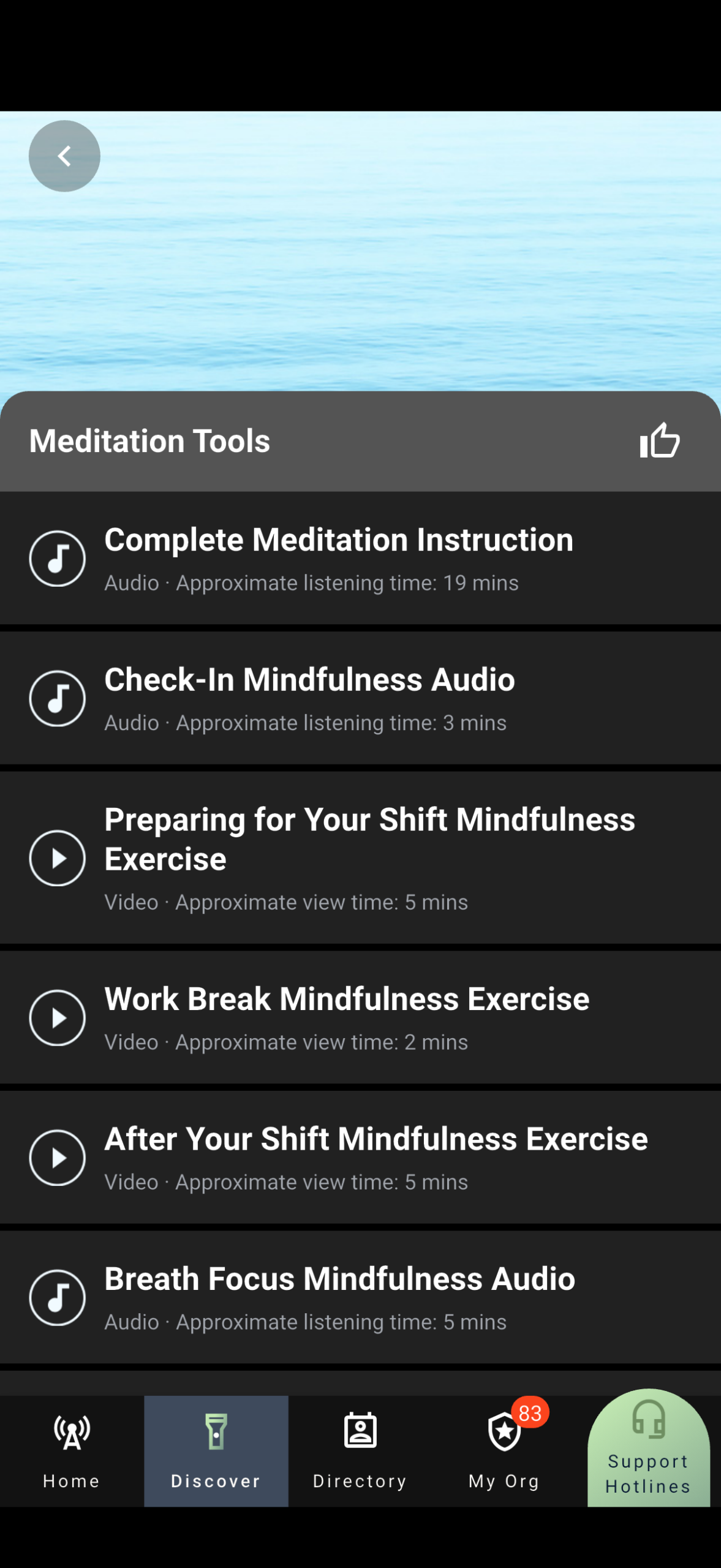
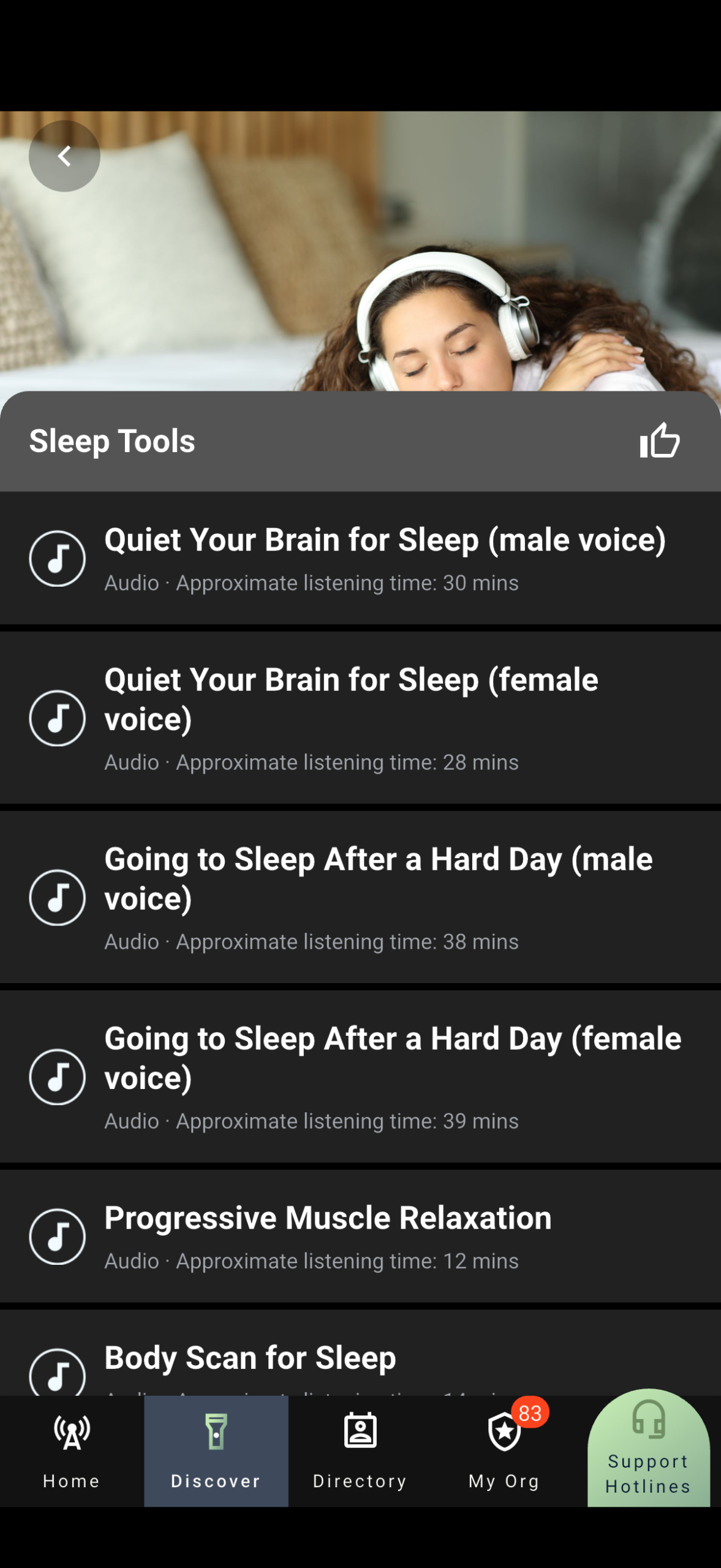
If your agency is a Lexipol Wellness customer, you have access to guided mindfulness exercises. Check out the Meditation Tools and Sleep Tools within the Wellness App.