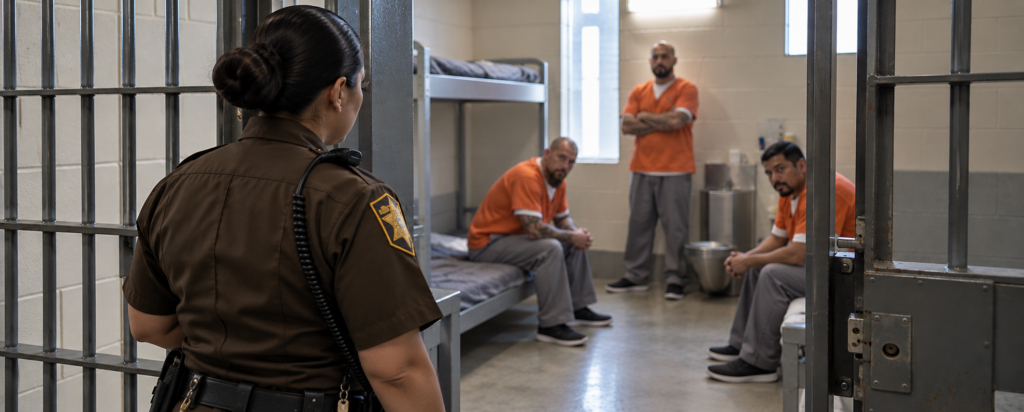
Across the nation, county correctional facilities operate under tight constraints, with limited bed space, rapid intake, frequent movement, and mixed populations. These conditions create volatility and risk.
Effective, standards-based classification is crucial for mitigating this risk. Inmate classification is the operational backbone. It drives housing assignments, supervision levels, program access, and specialized medical/mental-health support, and it must go beyond basic separation by gender or criminal charge to account for factors like violence history, gang associations, and vulnerability.
Done right, inmate classification supports the “smooth shift” — when officers and inmates move through the day with minimal conflict and inmates adjust successfully to life in the jail. For this to happen, classification must incorporate best practices such as:
- Real-time behavioral and mental-health observations
- Objective criteria for placement
- Clear documentation of why decisions were made
- Controlled movement aligned to risk level
- Continuous observation with prompt reclassification when new risks emerge
All of the factors above can help reduce violence, self-harm, victimization, contraband, and costly, indefensible housing errors.
“Inmate classification supports appropriate supervision and housing using objective factors such as current charges, arrest and intake behavior, sobriety, escape risk, and the need to separate certain inmates.”
Key Purposes of Classification
Let’s examine some key factors for inmate classification through hypothetical examples of issues caused by inaccurate processing. For each of these factors, we’ll also explore some best practices in your intake process that can improve facility safety, minimize conflicts, and reduce operational difficulties.
Security and Housing Assignment
Example: A 24-year-old man is booked into a county jail for misdemeanor domestic battery and a court-order violation requiring mandatory appearance. At booking, he is verbally aggressive and agitated. Records and collateral notes show prior documented threats that did not lead to arrest or conviction, along with multiple court appearances and noncompliance with court orders. Because staff focus on the misdemeanor charge and his lack of prior incarceration, he is placed in minimum-custody general population. Within 24 hours, he instigates a fight in a common area and seriously injures another inmate.
Analysis: This scenario shows that relying only on the current charge and the person’s lack of prior jail history can lead staff to underestimate risk. Verbal aggression and agitation at booking — combined with documented threats, repeated court involvement, and recent noncompliance — are meaningful indicators that may warrant closer supervision and a more controlled initial placement than minimum-custody general population. The best practice is to apply objective criteria, incorporate observed behavior and verified background, document the rationale for placement, and reassess quickly as new risk information emerges.
Health and Behavioral Needs
Example: A single mother is arrested on a petty theft warrant tied to multiple failures to appear. During intake, she is tearful, withdrawn, and compliant. She reports recent job loss and food insecurity and says she has not eaten in two days. While staff complete booking paperwork, she quietly says, “I feel hopeless.” She is placed in a standard holding cell to await processing. Within an hour, she becomes overwhelmed, bangs her head against the door, and lashes out when officers intervene, causing minor injuries. She is then placed on suicide watch.
Analysis: The misstep was treating her as routine instead of responding to the warning signs. Tearfulness, withdrawal, acute stressors, and the “hopeless” statement should trigger suicide-risk questions, potentially resulting in mental-health or medical screening, closer observation, and a safer, supervised placement pending assessment. The best practice is to document the cues, notify clinical resources, and promptly update housing and classification as new risk information emerges.
Special Management or Protective Concerns
Example: A middle-aged man is booked into the county jail on charges related to possession of child sexual abuse material (CSAM). He has no prior convictions and is compliant during intake. Based on standard scoring, he is assigned to a medium-custody unit. Within a few days, other inmates learn the nature of his charges, and a fight breaks out, leading to injuries that require infirmary treatment.
Analysis: This scenario highlights a possible classification shortfall. Standard scoring can support medium custody, but cases like this benefit from an added lens for vulnerability and separation needs. A stronger outcome comes from documenting the indicators, triggering a quick secondary review, and selecting a safer placement option, such as structured separation or protective housing with appropriate supervision, to reduce predictable victimization and avoidable medical and liability exposure.
Program Eligibility and Release Considerations
Example: An inmate is serving a one-year county jail sentence for resisting arrest and battery. He is initially classified as medium custody because the committing offense involved violence toward another person. Over several months, he generally follows rules and works when assigned. He has one write-up for refusing an order, and staff document several incidents where he becomes verbally confrontational during directives and needs repeated staff intervention before complying. At his review, the officer maintains medium custody because the original offense reflects recent violence and the documented pattern of defiance suggests the inmate may escalate under stress, making a lower-supervision housing assignment premature.
Analysis: This decision reflects a cautious, defensible approach rather than an automatic “no.” The committing offense involved recent violence, and the record shows a pattern, albeit low-level, of resistance to authority that occasionally requires repeated intervention. The best practice is to base the decision on documented behavior trends and objective risk factors, not a single incident, and to distinguish routine discipline from true changes in custody level. If medium custody is maintained, staff should document the specific indicators driving the decision, identify clear behavioral expectations for step-down, and schedule a timely reassessment so improved compliance can translate into increased program access as appropriate.
Disciplinary and Risk Management Factors
Example: A correctional officer is notified that a detective from another county is coming to interview an inmate housed in a minimum-custody unit regarding an open armed-robbery investigation tied to conduct that occurred before the inmate’s current incarceration. This information was not available during the initial classification. The inmate has been compliant in custody, follows rules, and has no recent misconduct. The officer believes the inmate is doing well and notes it in the file but does not initiate a classification review.
Analysis: This scenario highlights how new, credible information can change an inmate’s risk profile even when day-to-day behavior is stable. An armed robbery investigation may signal increased violence risk, escape motivation, outside associates, or retaliation concerns that a minimum-custody placement may not be designed to manage. The best practice is to document the new information, notify classification/supervision, and initiate a timely reclassification review to determine whether housing, supervision level, movement controls, or separation needs should change. The goal is not to punish based on an allegation, but to reassess safety and security based on materially updated risk information.
4 Factors for Successful Classification
The above examples illustrate factors that determine whether classification is effective at reducing risk and potential harm to inmates.
- Initial Classification Review. Early in booking, staff should complete an initial classification interview and form to flag predatory, violent, and at-risk inmates and guide temporary housing and supervision. Key inputs include current charges, criminal and incarceration history, and behavior during arrest and intake, including intoxication or impairment. Staff should also consider vulnerability and personal safety factors, such as age, sex, and gender identity, and document real-time observations of mental and emotional condition for signs of self-harm, distress, or aggression. If the individual remains in custody, a more in-depth, scored classification should follow as soon as possible, but no later than 24 hours after arrival, to support a longer-term housing decision and appropriate referrals.
- Controlling Movement and Supervision. Inmate movement and supervision should match each inmate’s current classification and documented risk so access to jobs, jail programs, recreation, and transfers aligns with required supervision and any separation needs. Classification supports appropriate supervision and housing using objective factors such as current charges, arrest and intake behavior, sobriety, escape risk, and the need to separate certain inmates. Movement should follow established facility procedures, with clear staff accountability and documentation of exceptions. Correctional officers should use additional controls – such as increased supervision, extra escorts – or restraints when warranted by the inmate’s classification, current behavior, and facility procedures.
- Documentation. Documentation is the backbone of the classification process because it supports consistent, defensible decisions across shifts. Classification plans rely on objective screening tools and intake and housing forms, with a process to ensure classification and housing records are maintained for each inmate. Complete records help staff understand an inmate’s current risks, relevant history, and housing needs, and they show that placement decisions were based on documented screening, interviews, observations, and scoring. Screening information should be handled confidentially and shared only with those who have a legitimate need to know.
- Continuous Observation and Reclassification. Classification is not a one-time intake decision. It is an ongoing safety process that depends on staff noticing changes and elevating them quickly. While classification staff complete formal reviews, line staff and program staff are often the first to see emerging risk through day-to-day behavior, peer conflicts, rule compliance, and mental health stability. When an inmate’s conduct shifts, staff should promptly communicate the change to the appropriate supervisor or classification function so housing, supervision, or separation needs can be reassessed. This includes escalating aggression, credible threats, gang-related dynamics, new outside charges, serious violations, or repeated cellmate conflicts. For signs of self-harm risk or acute mental distress, staff should escalate immediately for clinical screening and ensure appropriate monitoring until direction is provided. This loop helps prevent assaults, victimization, escapes, and avoidable crises.
Reduce risk, enhance accountability and improve efficiency with Lexipol’s Policy Info Sheet: DOWNLOAD NOW!
Strengthening Safety Through Smarter Classification
Effective inmate classification and housing are foundational to safe, efficient, and legally sound correctional operations. Accurate classification prevents conflicts, optimizes resource allocation, and protects both inmates and staff. By integrating these best practices, from detailed initial intake to proactive reclassification, facilities can transform their approach from reactive management to a forward-thinking safety strategy.
To keep your staff current on evolving correctional standards and compliance requirements, utilize Lexipol’s specialized training and resources. We offer policy and training solutions that equip your team with the knowledge needed for an effective, legally defensible, and safe inmate classification system.
- Tip Sheets