

Coffee culture in law enforcement reflects the realities of modern policing, where officers balance long sedentary shifts with sudden, high-stress activity. This article examines the science behind caffeine use, the health risks tied to prolonged sitting, and why fitness and wellness remain essential for operational readiness. Using dramatic body-worn camera video as a focal point, the piece highlights composure, training, and professionalism under pressure.
Several months ago, a buddy sent me a video during an online discussion we were having about grace under fire.
This particular YouTube clip was posted in 2022 by the Tacoma Police Department, and the incident it documents was anything but routine. Officers responding to a domestic violence call quickly found themselves pinned down when the suspect opened fire, turning the scene into a frightening and dangerous gunfight. Multiple units worked to contain the threat as the suspect kept moving and shooting, moving and shooting.
As the chaos unfolds, Officer Christopher Munn arrives, fully aware he’s driving into an active shooter situation. He stops his vehicle, sets down his coffee cup, exits his SUV. With the cool composure of a Western gunslinger, he retrieves his patrol rifle and brings the incident to a decisive end with a single, well-placed round from 183 yards away. (The footage from Officer Munn’s body-worn camera begins at about 5:06.)
As I watch this footage again, two things stand out.
First, Officer Munn exhibits truly remarkable composure in a dangerous situation. With almost Zen-like poise, he steadies himself against his patrol SUV and takes the shot that stops the threat. Second, before doing all this, he carefully sets his coffee cup on the dashboard — presumably so it wouldn’t spill.
I mean … wow.
People in lots of jobs are known for their coffee consumption, but few professions are more closely associated with coffee than law enforcement. Firefighters have the firehouse coffee pot. Journalists have newsroom coffee. Nurses are famous for downing coffee in heroic quantities. But cops? “Cops and coffee” is practically a cultural cliché.
The question is: Is that a bad thing?
Coffee and the Police Officer
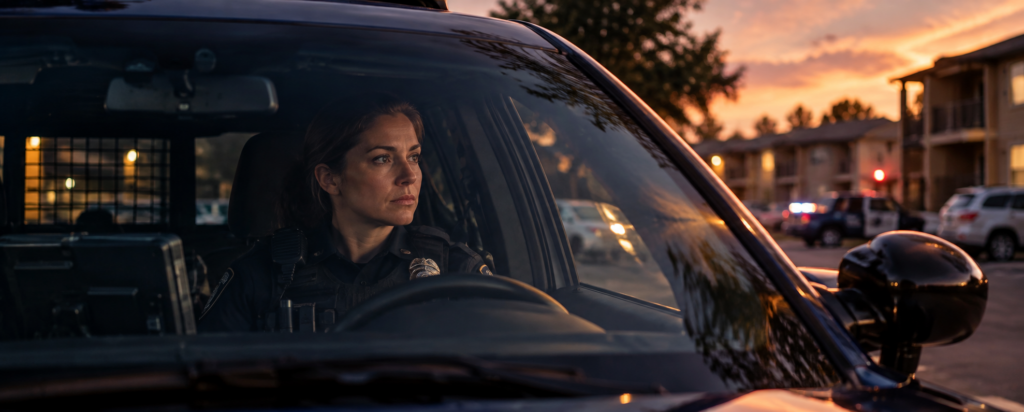
Law enforcement involves long shifts, irregular sleep, overnight work, tedious report writing, and sudden bursts of stress. A patrol officer may spend hours sitting in a vehicle monitoring the radio, only to be thrown without warning into a foot pursuit, fight, traffic collision or active threat.
Coffee fits that pattern. It’s portable, widely available, and easy to consume while driving, typing or conducting surveillance at 3:00 a.m. when options are limited and fatigue is real.
This is also where the classic “cops and doughnuts” stereotype comes from. Before 7-11s and all-night fast food, doughnut shops were often open when everything else was closed. They gave officers a place to warm up, use the bathroom, grab some quick calories and (just as importantly) fuel up with a cup o’ joe. As I’ve discussed before, those stops were less about indulgence and more about logistics — overnight patrol officers needed somewhere to go, and doughnut shops provided a “clean, well-lighted place.”
Teddy Would Approve
Recently, I stumbled across an article about President Theodore Roosevelt, a man who did practically everything to excess. Roosevelt was a rancher, soldier, police commissioner, governor, president, conservationist, author, hunter, boxer, and all-around badass. He won the Nobel Peace Prize and, posthumously, the Medal of Honor. He also led the charge on San Juan Hill, climbed the Matterhorn during his honeymoon, and survived an assassination attempt only to deliver a stemwinder of a speech with a bullet still lodged in his ribs.
And he drank coffee like the fate of the Republic depended on it.
According to historical accounts, Roosevelt downed cup after cup throughout his waking hours, with some sources estimating he consumed as much as a gallon a day. His breakfast “cup,” as described by his son, was more of a small bathtub, and sweetened with seven lumps of sugar. (Editor’s note: This is not a recommendation.)
Still, the Roosevelt story is useful because it connects coffee with something bigger than caffeine dependency. Coffee has long been associated with people doing hard things. For example, between February 28 to April 8 the U.S. military drank over 950,000 gallons of coffee, or almost 200,000 cups per day. Coffee is the favored drink of soldiers, writers, presidents, shift workers, medical professionals, and anyone else trying to stay alert while the rest of the world drowses.
And yeah, law enforcement officers fall squarely into that category.
“One minute you’re holding a paper cup and the next, you’re making a decision that ends a deadly threat.”
Myths and Facts About Caffeine
Before we go any further, let’s take a quick look at caffeine, a (or maybe “the”) key component of “go juice.” For something so common, it’s surrounded by a lot of myths — some true, some not so much.
- “Caffeine is bad for you.” For most people, moderate intake is considered safe and is associated with neutral or even beneficial health outcomes, including lower mortality risk in some studies.
- “Caffeine gives you energy.” Not exactly. Caffeine works by blocking adenosine, the chemical that makes you feel tired. It doesn’t create energy — it just helps you feel temporarily more alert.
- “More caffeine = better performance.” Up to a point, caffeine can improve alertness and reaction time. Too much, though, can lead to jitters, anxiety, and reduced fine motor control — none of which is helpful in high-stakes scenarios.
- “Caffeine dehydrates you.” This is an overstatement. Regular coffee drinkers can develop a tolerance to caffeine’s mild diuretic effect, and the water in the coffee you drink still contributes to your daily fluid intake.
- “Caffeine ruins your sleep.” Yes, but timing matters. Caffeine can disrupt sleep, especially if consumed later in the day, since it stays in your system for several hours.
- “You can build up a tolerance to caffeine.” Yes, you may feel caffeine’s effects less over time, but it still affects your body — especially in your sleep, heart rate, and overall stress levels.
Bottom line: Caffeine isn’t a miracle or a menace — it’s a tool. Used wisely, it can support alertness and performance. Used poorly, it can mask fatigue and create new problems.
What ‘Moderation’ Looks Like
Compared with President Roosevelt’s daily gallon of mud, “moderation” looks downright restrained. For most adults, moderate coffee consumption is about three to five cups per day. But that’s measured in standard 8-ounce cups — not those giant insulated mugs that look like you might dump them over your favorite football coach’s head following a Super Bowl win.
And pay attention to quantities. That “World’s Greatest Cop” mug on your desk is probably closer to 11 or 12 ounces. And if you buy your coffee from anywhere that rhymes with “car trucks,” the math gets even more interesting. A “tall” (confusingly, one of the smallest options), is 12 ounces, while a “grande” is 16. A hot “venti” comes in at 20 ounces, and a “trenta” is 30 — nearly four standard cups in a massive cardboard vat.
The caffeine adds up quickly. An 8-ounce cup of black coffee generally has about 95 to 165 milligrams of caffeine. A 20-ounce black coffee, such as a large or hot venti, may contain 235 to 415 milligrams, depending on the brew. In other words, one large coffee can deliver more than double the caffeine of a standard cup and may push close to (or past) the commonly cited 400-milligram daily limit.
And then there are the frou-frou drinks. Black coffee is not the same thing as dessert dressed up as rocket fuel. A standard cup of black brewed coffee contains about 2 calories, while a large sweetened specialty Frappa-java-calorie-bomb can deliver upwards of 500 calories once syrup, milk, whipped cream, and other extras are mixed in.
So, yes, coffee can be part of a healthy routine. But “moderate” means paying attention to the size of the cup, the strength of the brew, and whatever else is hitching a ride.
The Mobile Desk Job
Modern policing involves a strange contradiction. Officers must be physically and mentally ready for sudden, intense action … and yet much of the job involves sitting for long periods of time.
Historically, officers were called “flatfoots” because they walked beats, covering entire neighborhoods on foot. They knew local shopkeepers and ne’er-do-wells, moved through alleys and racked up miles before step-counting was even a thing. Today, many officers spend large portions of their eight-, 10- or 12-hour shifts behind the wheel of a patrol vehicle. The squad car is a mobile office, communications hub, report-writing station, interview room, lunchroom, and occasionally (unfortunately) a place to spill coffee.
In sum, law enforcement has become, by and large, a “mobile desk job.” Officers sit while driving to calls. They sit while clearing calls. They sit while writing reports. They sit in court. They sit during surveillance. Then, suddenly, they are expected to run, fight, lift, carry, shoot accurately, and communicate clearly under stress while staying on the right side of a bright, constitutional line.
We’ve all heard the phrase “sitting is the new smoking,” and it’s absolutely true that prolonged sedentary behavior is associated with negative health outcomes, including increased risk of all-cause and cardiovascular mortality. In other words, the body does not love being parked in a chair — or a patrol SUV — for long periods of time.
And this is where the science gets interesting.
Is Coffee a ‘Cure’ for Sitting?
A 2024 study published in BMC Public Health examined the relationship between daily sitting time, coffee consumption, and mortality risk among U.S. adults. The study involved 10,639 participants and followed health outcomes for up to 13 years.
Here’s the part that should come as no surprise: Researchers found sitting more than eight hours per day was associated with higher risks of all-cause and cardiovascular disease mortality compared with sitting less than four hours per day. Because sitting is the new smoking, right?
But the findings related to coffee consumption were more interesting. Participants in the highest quartile of coffee consumption showed reduced risk of both all-cause and cardiovascular mortality compared to those who didn’t drink coffee.
Even more striking, the researchers found non-coffee drinkers who sat six or more hours per day were 1.58 times more likely to die from all causes than coffee drinkers who sat less than six hours per day. The association between prolonged sitting and increased mortality appeared primarily among adults who did not drink coffee.
Now, that doesn’t mean coffee “cancels out” sitting in the way a night out with friends cancels a bad shift. This was an observational study, meaning it shows likely association, not 100% proof of causation. Coffee drinkers may differ from non-coffee drinkers in other ways researchers can’t fully measure. They may have different diets, habits, schedules, socioeconomic factors, or baseline health characteristics.
So no, coffee is not a magical prescription for instant wellness. You can’t drink a large black coffee, sit motionless for 12 hours, eat gas-station nachos (with “mystery meat” chili), and then declare yourself metabolically invincible.
But the findings do add to a growing body of research suggesting coffee, at least in non-Rooseveltian quantities, is not the villain it was once made out to be. In many studies, moderate coffee consumption is associated with neutral or even beneficial outcomes, including lower risk of certain mortality measures. Another large prospective study in BMC Medicine found coffee and tea consumption were inversely associated with several mortality outcomes, though the relationship was not always linear.
The practical takeaway for police officers is simple: Coffee may be one of the less problematic parts of the modern patrol lifestyle. The bigger issue is the lifestyle itself.
Tip Sheet: 8 Proven Strategies for Better Sleep: DOWNLOAD NOW!
Coffee Is Not the Problem — But It’s Not the Solution
For both officers and leaders, the message should not be “drink more coffee.” (And let’s be honest, very few in law enforcement need much encouragement in that department.) Instead, the message is this: Coffee can be part of a healthy routine, but it cannot replace one.
Coffee can’t replace sleep. It can’t replace movement. It can’t replace strength training, cardiovascular fitness, hydration, nutrition, or stress management. It can help with alertness, but it can’t fix the long-term consequences of chronic fatigue. It may offer some protective associations in sedentary adults, but it does not exempt a person from the impacts of prolonged sitting.
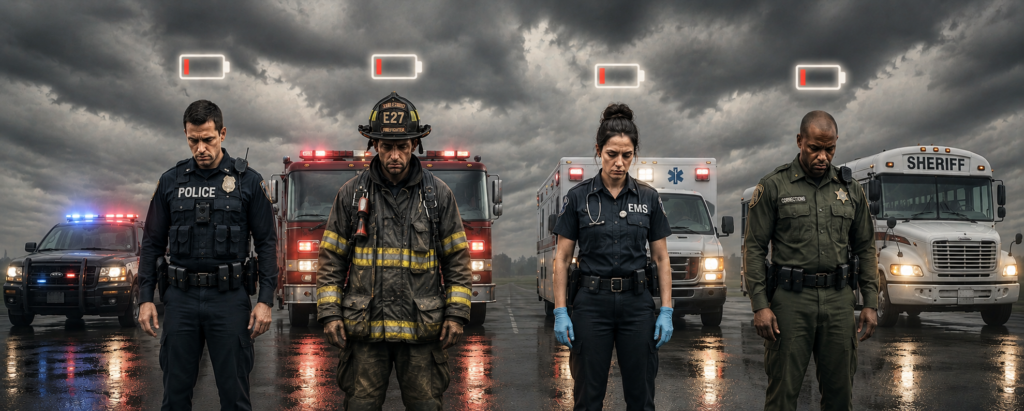
In public safety, this matters because fitness is not just about looking good in a uniform. It’s about occupational readiness. Officers need the physical capacity to control suspects, climb stairs, survive fights, recover from stress and make good decisions while physiologically overloaded.
Being fit for duty is not just about passing a test at the academy. It is about remaining capable throughout a career.
Back to the Coffee Cup
This brings us back to Officer Munn and his BWC video. The coffee cup is memorable because it’s so ordinary. Everyone who’s worked patrol recognizes that little detail: the cup on the dashboard going cold, the routine shift interrupted by chaos. But what makes the video remarkable is not that Officer Munn had coffee. It’s that he refused to allow the chaos to control his actions.
He came. He saw. He set down his cup. He retrieved the right tool. He braced himself. He made the shot. None of that came from the coffee. It came from training, experience, professionalism, and composure.
Still, the coffee cup on the dashboard is a pretty good symbol. It reminds us that policing often lives in the space between routine and crisis, between the mundane and the life-threatening. One minute you’re holding a paper cup and the next, you’re making a decision that ends a deadly threat.
So maybe the old stereotype deserves a second look. The phrase “cops and coffee” isn’t a punchline. In some ways, Officer Munn’s cup represents the reality of the job: long hours, sedentary shifts, sudden danger, and the need to stay calm and steady when everything goes sideways.
Just be careful not to spill it.
- Webinars